- Born
- c. AD 14Mê Linh, Jiaozhi commandery (Han imperial frontier province) · now Mê Linh District, Hanoi, Vietnam
- Died
- AD 43Disputed: the Hát River at its confluence with the Red River, per Vietnamese tradition — Han Chinese sources record only her capture and death, without naming a place · now Near Hát Môn, Phúc Thọ District, Hanoi, Vietnam
- Known for
- Leading Vietnam's first recorded rebellion against Chinese rule, capturing sixty-five Han strongholds with her sister Trưng Nhị
- People
- Lạc Việt — the Bronze Age aristocracy of Vietnam's Red River Delta, governed under Han Chinese administration while keeping their own hereditary lordships
- Spouse
- Thi Sách, a Lạc lord of Chu Diên — her only recorded husband
- Children
- None recorded
“First, I vow to avenge my country. Second, I vow to restore the old line of the Hùng kings. Third, I vow to avenge my husband. Fourth, I vow this oath will be fulfilled.”
The oath tradition preserves for her, from Thiên Nam Ngữ Lục, a Vietnamese verse chronicle compiled in the 17th–18th century — composed some 1,600 years after she lived, not a contemporary record
Milestones
- c. AD 14Born at Mê Linh (no source gives her age or birth year — this is an unverified placeholder, not a scholarly estimate)
- AD 40Leads her sister Trưng Nhị and the Lạc Việt in revolt, capturing 65 Han strongholds
- AD 40Proclaimed queen over the liberated territories of Jiaozhi
- AD 42Han emperor Guangwu dispatches the veteran general Ma Yuan to retake the province
- AD 43Defeated by Ma Yuan's army; dies — Chinese sources say captured and beheaded, Vietnamese tradition says drowned by choice
Two Sisters of Mê Linh
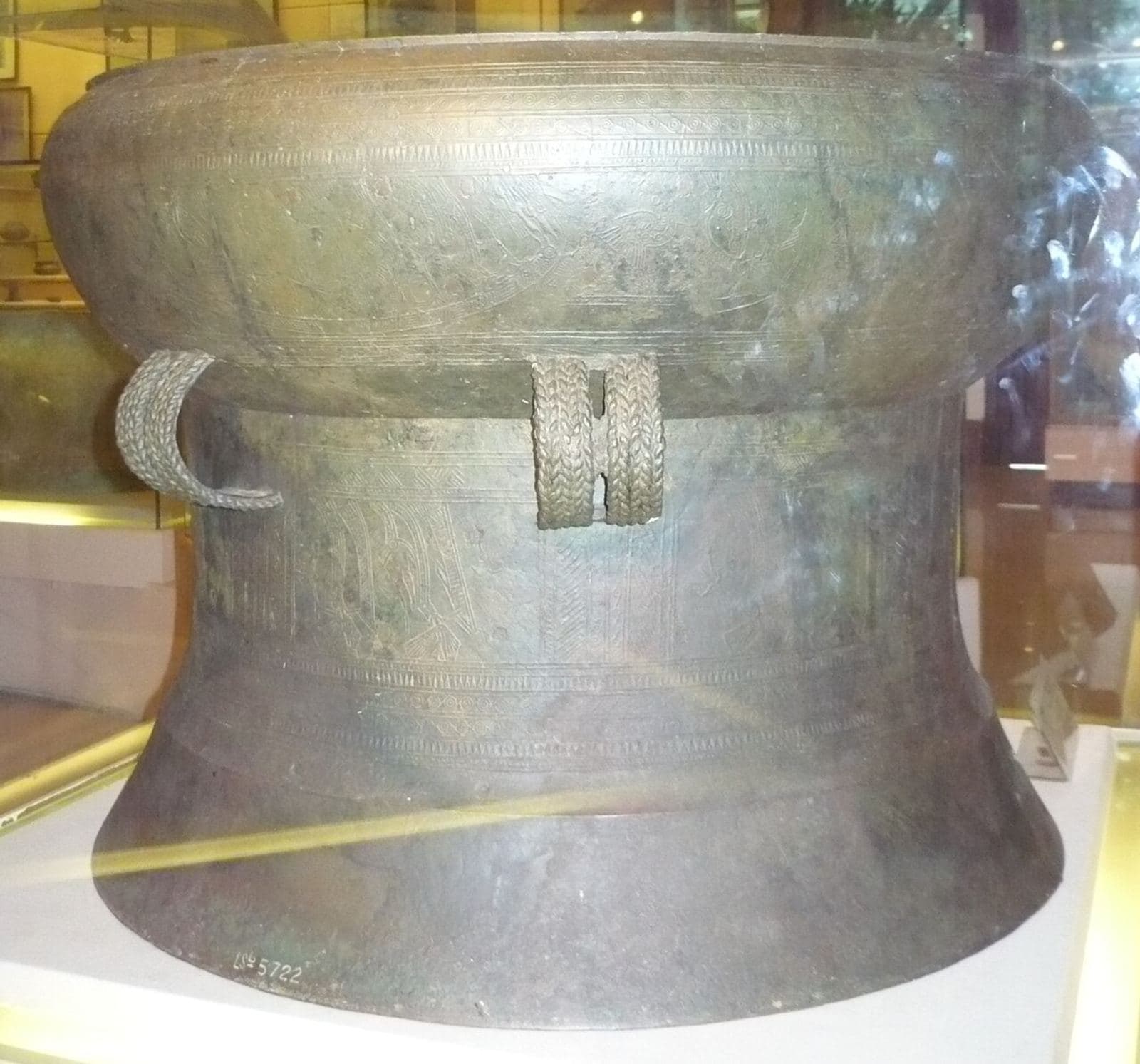
Trưng Trắc was born into a Lạc Việt aristocratic family in Mê Linh, a district of the Red River Delta that Han China had ruled as the frontier commandery of Jiaozhi since 111 BC. Han administration governed the region through a deliberate two-tier arrangement: Chinese-appointed prefects held formal authority, but a hereditary local aristocracy — the Lạc lords — kept real power over their own people underneath them. It was an arrangement built for friction, and Trưng Trắc's own marriage sat right at its center: she married Thi Sách, a Lạc lord of the neighboring district of Chu Diên, a union that joined two of the delta's most powerful local families into one.
No source records when she was born. Modern popular accounts often give "14 AD," but this dossier could not trace that figure to any ancient text or scholarly calculation — it appears to be a number that has simply circulated until it looked like fact. It is used here only as an unverified placeholder, and the honest answer is that we do not know her age at any point in her life.
The spark for revolt, in the version most people have heard, is personal: the Jiaozhi governor Su Ding executed Thi Sách, and Trưng Trắc rose up to avenge him. That story comes from Vietnam's own national chronicle, compiled in 1479 — fourteen centuries after the events it describes. The earlier Chinese source, the Hou Hanshu, tells it differently and more coldly: it says only that Su Ding was cruel and grasping, and that he tried to bring Thi Sách under control "by law," and that Trưng Trắc rose in response. Modern historians read the later personal-vengeance story as a dramatization of what the earlier source frames more broadly — resentment of harsh Han taxation and administration across the whole delta, of which Thi Sách's fate was one spark among several, not the sole cause.
Sixty-Five Citadels
In the spring of 40 AD, Trưng Trắc and her younger sister Trưng Nhị led the Lạc Việt in open revolt. The result, even filtered through a Chinese source with no reason to inflate a rebel's success, is startling: the Hou Hanshu records that they "took sixty-five strongholds," with the uprising spreading from Hepu — in what is now Guangxi, China — south to Rinan, in what is now central Vietnam. In effect, the entire Han administrative structure across the region collapsed in a matter of months, and Trưng Trắc was "established as queen."
How two women commanded a coalition wide enough to do this is a real historical question the sources simply do not answer. The Hou Hanshu was written for a Han audience interested in reporting that the frontier had rebelled and been retaken, not in explaining Lạc Việt political organization — so the mechanics of the sisters' authority remain genuinely unknown, not a gap this page can responsibly fill with invented detail. What historians can say with confidence is that the revolt's scale points to broad grievance against Han rule, not merely a single household's vendetta.
Three Years a Queen
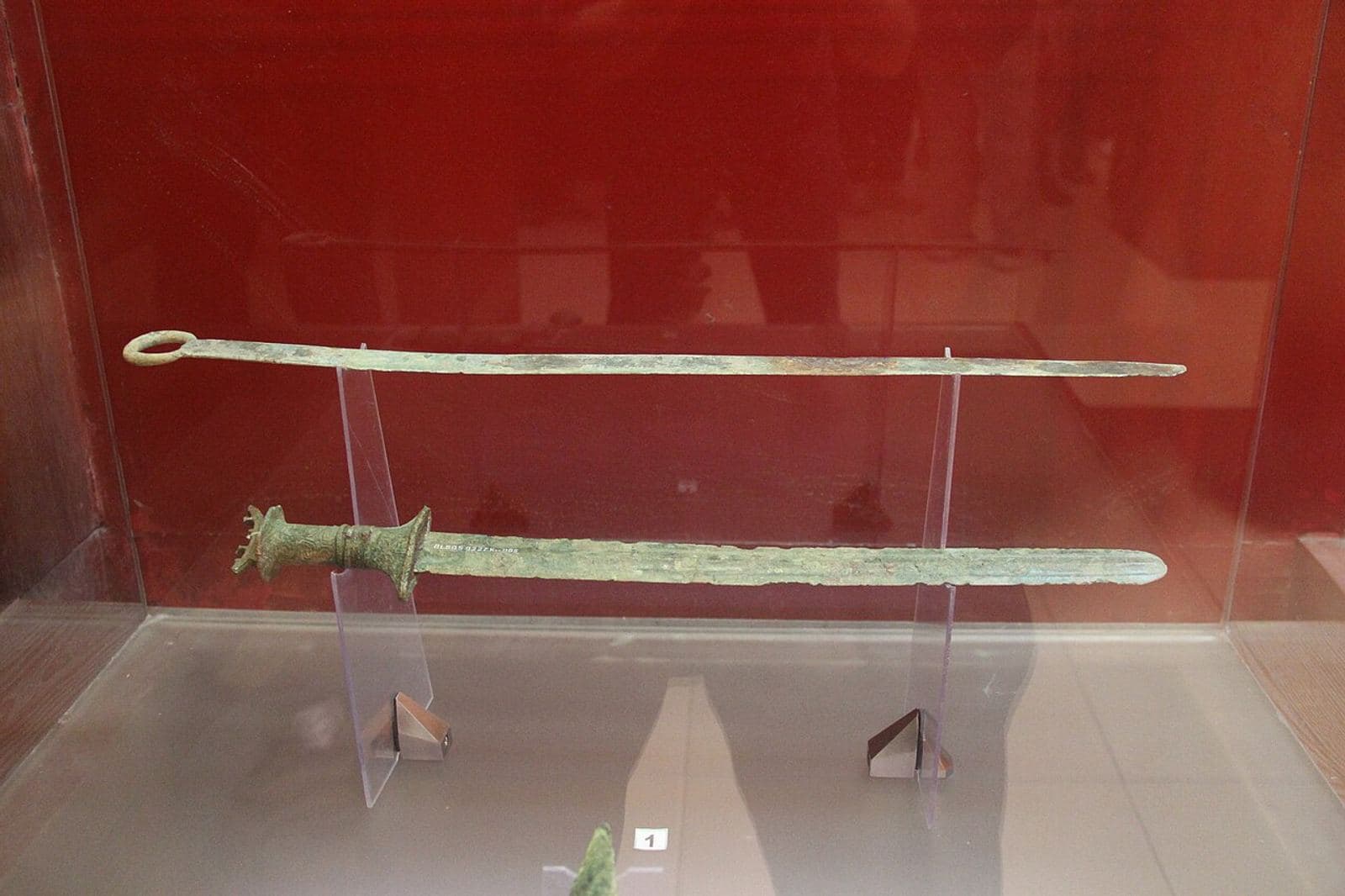
The sisters ruled the liberated territory for roughly three years, and here the record turns remarkably thin. Beyond the fact and rough duration of their rule, the Hou Hanshu offers almost nothing — no confirmed capital site verified by archaeology, no surviving Lạc-issued documents or coinage, because the Lạc Việt of this period did not leave the kind of written administrative record Han China did. The honest fact to sit with is the silence itself: we know they reigned, and for about how long, and very little else.
Vietnam's own later historical tradition fills that silence generously. The 1479 national chronicle and an even later verse epic, the Thiên Nam Ngữ Lục, describe a court, named officials, and a capital established at Mê Linh — a much richer picture, but one written thirteen to seventeen centuries after the fact, as part of Vietnam's long project of building a continuous national memory of resistance to Chinese rule. Historians such as Keith Taylor treat these later texts as genuine and important evidence of how later Vietnam understood the sisters — just not as reliable eyewitness detail about the year 41 AD itself.
Ma Yuan's Return
In 42 AD, the Han emperor Guangwu sent one of his most celebrated generals, Ma Yuan — a veteran commander already in his fifties, central to the Han dynasty's own restoration a generation earlier — to retake Jiaozhi. His campaign, unusually for this period, is described in real logistical detail in Chinese sources: his biography records troops cutting canals and building causeways to move grain supplies through difficult delta terrain, a methodical rather than reckless approach to a war he clearly took seriously.
Later tradition — both Chinese and Vietnamese, but only attested long after Ma Yuan's own century — holds that he marked the reconquered frontier with bronze pillars, inscribed with a warning that Jiaozhi would fall if the pillars ever did. No such pillar has ever been recovered by archaeologists, and a 2024 academic study of the legend concludes that the pillars mattered for centuries as a story in both countries' historical memory, not as a monument anyone can point to today. It is one of this history's most vivid details, and one of its least verifiable.
The River
The sisters were defeated in 43 AD — a date that rests on solid ground, transmitted through Han court records. What happened to them at the end is where Vietnamese and Chinese memory diverge, and neither version should be mistaken for the plain, settled truth.
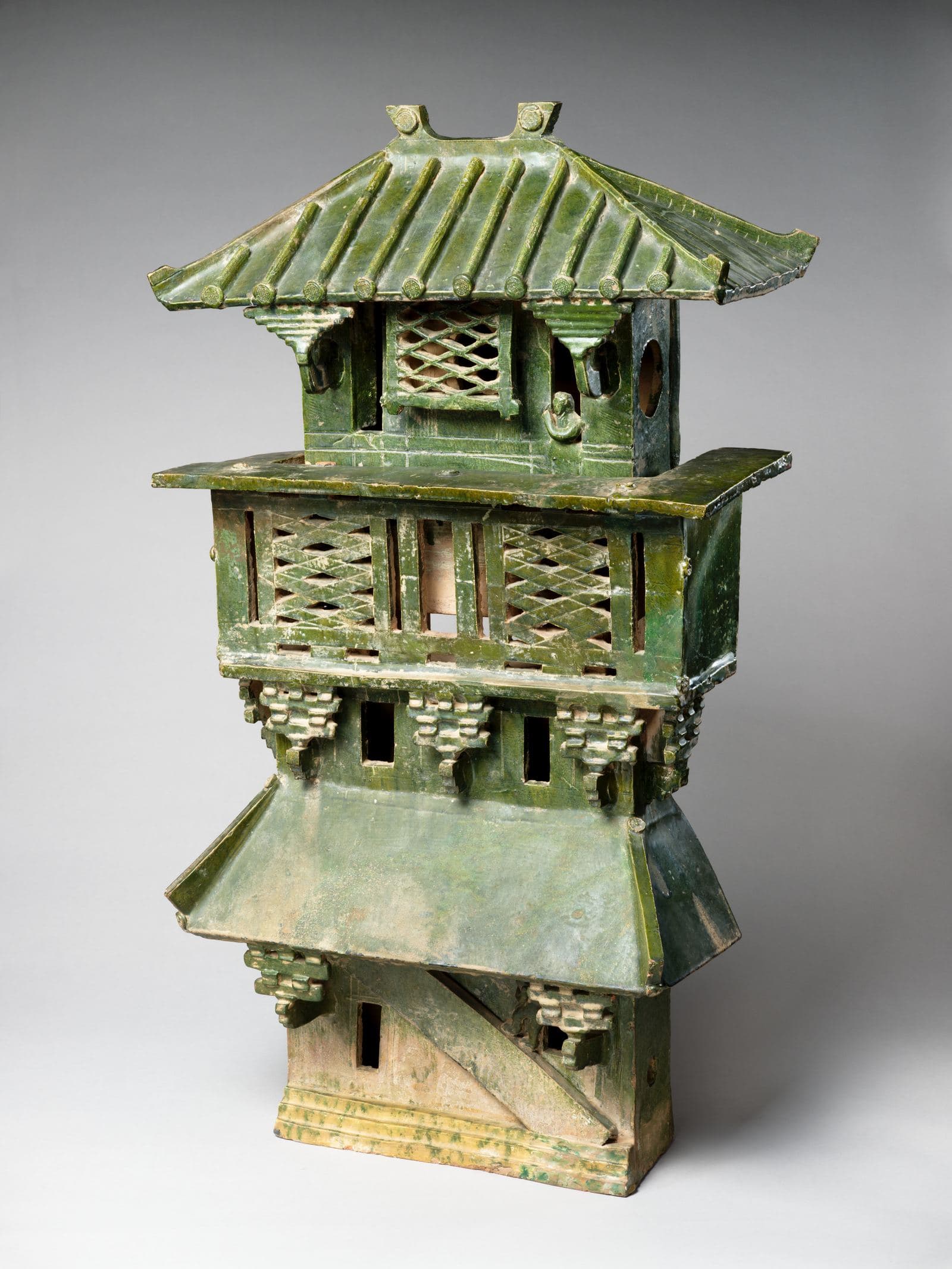
The Chinese sources are blunt: Trưng Trắc and Trưng Nhị were captured and beheaded, and their heads sent north to the Han court at Luoyang as proof of victory — the standard treatment of a defeated rebel leader. Vietnamese tradition, the version taught and commemorated in Vietnam today, says the sisters refused capture and drowned themselves together at the meeting of the Hát and Red rivers, choosing death on their own terms over submission. Modern historians of early Vietnam, including Keith Taylor, read the drowning story as a later national reshaping of the Chinese account's colder ending — a defeat transformed, in memory, into a choice.
Both versions belong in this story, honestly labeled: one from the winning empire's court record, one from the country that would spend the next thousand years, on and off, trying to undo that empire's rule. Two sisters from a delta district briefly ended a century of Han administration and forced an empire to send one of its best generals to take it back. How the story of their end gets told still depends, eighteen centuries later, on which side of the river you're standing.