- Born
- c. AD 497Most likely Constantinople; Cyprus and Syria are also claimed in some sources, unresolved · now Istanbul, Turkey
- Died
- AD 548Constantinople · now Istanbul, Turkey
- Known for
- Rising from stage actress to empress of Byzantium, and standing firm beside Justinian when the Nika riots nearly toppled his throne
- People
- Byzantine Greek — born into the entertainment world of the Hippodrome in the Greek-speaking Eastern Roman Empire
- Spouse
- Justinian I, born Petrus Sabbatius — married c. 525
- Children
- A daughter from before her marriage to Justinian — her name was never recordedNo child of the marriage to Justinian is known to have survivedA hidden son is claimed only by Procopius's hostile Secret History and is treated by historians as doubtful, not fact
“For one who has worn the crown, it is unbearable to live as a fugitive. As for me, I hold to the old saying: royalty makes a fine burial shroud.”
Procopius's own composed account of her words during the Nika riots, History of the Wars, Book I, ch. 24 (c. 1.24.33-37) — a historian's literary reconstruction of the moment, not a transcript
Milestones
- c. AD 497Born, most likely in Constantinople, daughter of Acacius, a Hippodrome bear-keeper
- c. AD 515Performs on the Constantinople stage, then travels to North Africa, Alexandria, and Antioch
- AD 524Empress Euphemia dies; Justin I changes the law barring senators from marrying actresses
- c. AD 525Marries Justinian
- AD 527Crowned Augusta as Justinian becomes sole emperor
- AD 528Orders Constantinople's brothels closed and founds the Metanoia convent for former prostitutes
- AD 532Speaks against fleeing the Nika riots; Justinian keeps his throne
- c. AD 537Pressures the removal of Pope Silverius, replaced by the more cooperative Vigilius
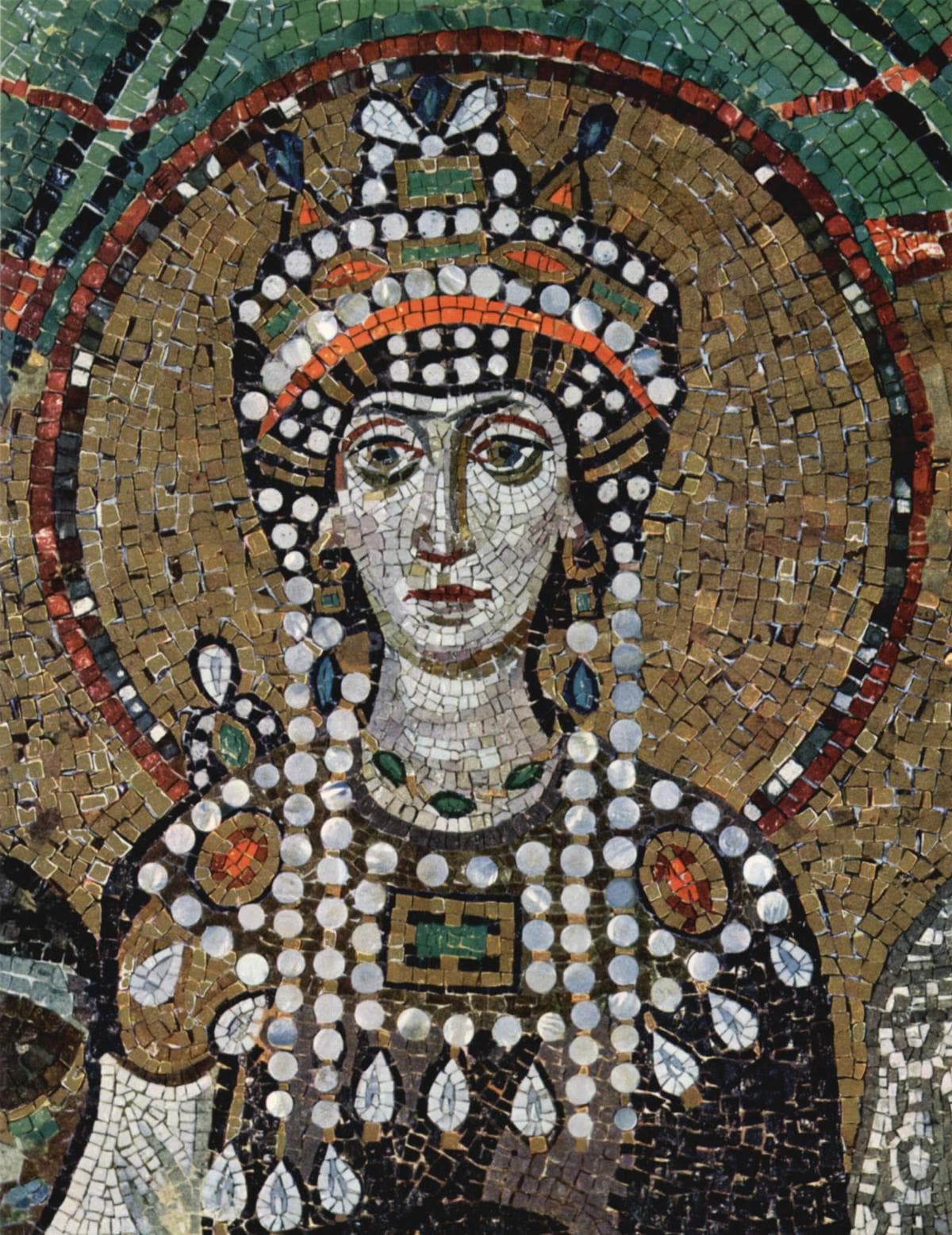
- c. AD 547The San Vitale mosaic portrait is completed in Ravenna, during her own lifetime
- AD 548Dies in Constantinople on 28 June; buried at the Church of the Holy Apostles
Early Life
Nearly everything written about Theodora's early life comes from the pen of one man, and he wrote three different versions. Before anything else on this page, that fact needs saying plainly: the historian Procopius of Caesarea left behind a measured wartime history, a flattering court panegyric, and a scathing, sexually obsessed hit-piece called the Secret History — written in secret and published only after both Theodora and the emperor she married were safely dead. All three cannot be equally true, and the most lurid claims about her come from the one book written to destroy her reputation rather than record her life.
What survives that fact-check is this: Theodora was born around 497 AD — no source gives the year directly, and the honest range historians work with runs from the 480s to the 510s — most likely in Constantinople, the daughter of Acacius, a bear-keeper who trained animals for the Hippodrome's Green faction. Her mother was a dancer. She had two sisters, Comito and Anastasia. This low, theatrical birth is not only Procopius's hostile claim — a far friendlier contemporary, the Syriac chronicler John of Ephesus, who adored Theodora as the protector of his own persecuted Monophysite church, independently calls her "Theodora from the brothel" in passing. When a fan and an enemy agree on where someone came from, that part is solid ground.
As a young woman, Theodora performed on Constantinople's stage, in a profession the law of the time classed alongside prostitution. That bare fact — a career in the disreputable, legally stigmatized world of the theatre — is accepted by sympathetic and unsympathetic historians alike. What is not accepted, by most modern specialists, are the specific, graphic sexual stories Procopius piles on top of it in his Secret History: these read, to historians like James Allan Evans and David Potter, as a conventional ancient genre of sexual slander aimed at powerful women, not as reportage. This page tells you she was an actress. It does not retell what the Secret History says she did on stage.
A Reversal of Fortune
Theodora's twenties took her a long way from the Hippodrome. She became the companion of a man named Hecebolus, newly appointed governor of Cyrenaica in North Africa, and travelled there with him. The relationship ended badly — Procopius says she was abandoned "destitute of the means of life" — and she made her way through Alexandria and then Antioch before returning to Constantinople. A popular tradition holds that she converted to the Monophysite branch of Christianity while in Alexandria; modern reference works are blunter about it than the popular version: there is no reliable evidence that a specific conversion event happened there. What is certain is the outcome, whatever its exact cause — as empress, Theodora became a lifelong, committed patron of Monophysite clergy, a theological stance opposed to her own husband's official position, and one that mattered enormously in an empire where the argument over Christ's nature could burn down a city block.
Marriage and Power
Back in Constantinople, Theodora caught the attention of Justinian — born Petrus Sabbatius, nephew and heir of the childless emperor Justin I. There was a real legal wall in the way: Roman law barred men of senatorial rank from marrying actresses, and Justin's own wife, the empress Euphemia, opposed the match. Euphemia died in 524, and Justin I promptly issued a new law letting senators marry reformed actresses with imperial consent — a law Procopius says was written specifically to clear Justinian's path. Theodora and Justinian married around 525.
When Justin died in 527, Justinian became sole emperor, and Theodora was crowned Augusta beside him — not a ceremonial title kept to the sidelines, but a working partnership. Justinian said so himself, in the preface to one of his own law codes: he calls her "partner in my deliberations." As empress she pushed for the closing of Constantinople's brothels, the arrest of the men running them, and founded a convent, Metanoia, for the women who had worked in them — though Procopius, true to form, recasts the same episode in the Secret History as a coercive confinement some women tried to escape by jumping from the walls. Both versions are in the record. Neither should be the only one you hear.
The Nika Riots
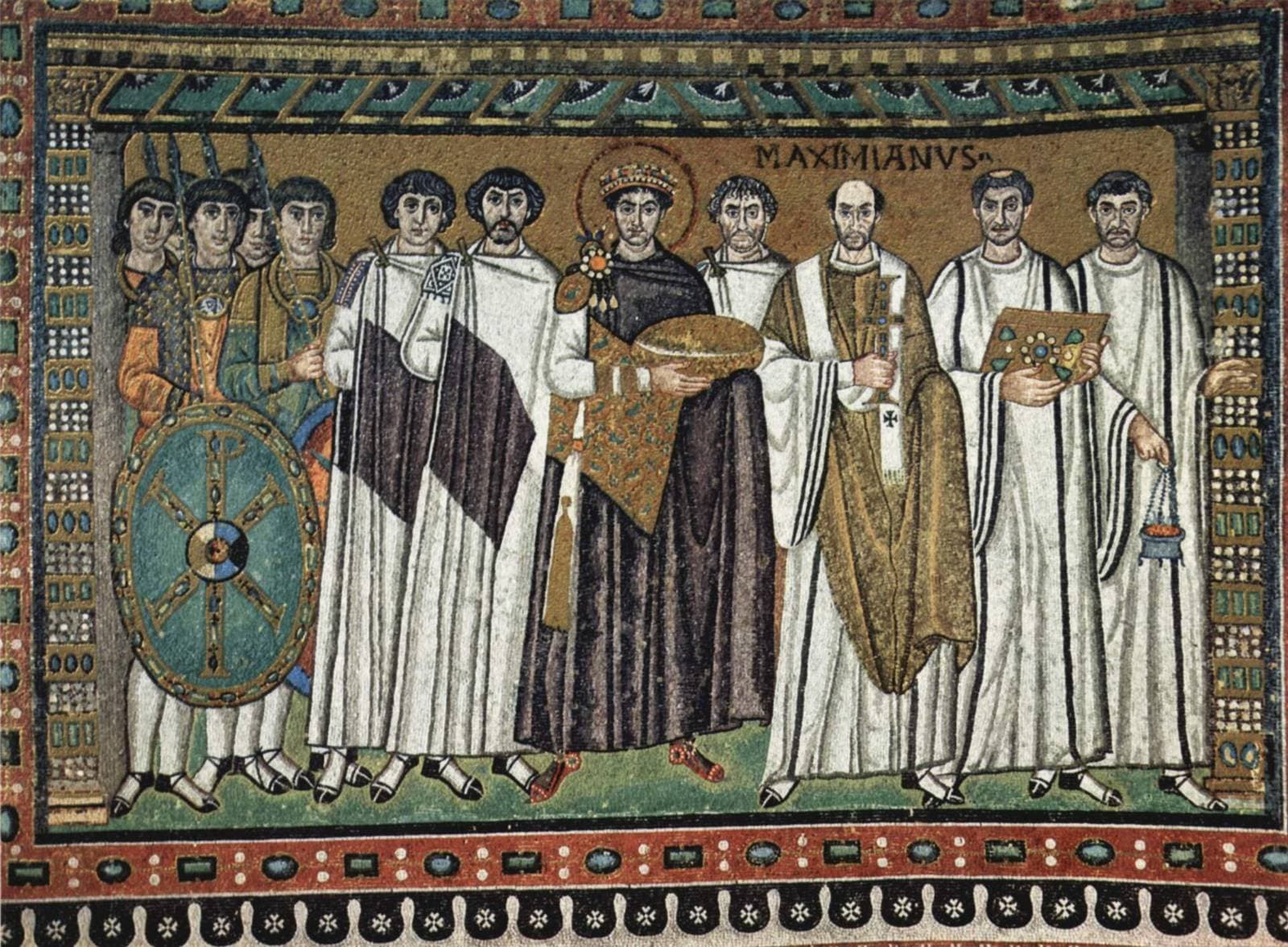
In January 532, a botched execution set off the worst riot Constantinople had seen: the Blue and Green chariot-racing factions, normally bitter rivals, united against Justinian's government, chanting "Nika!" — "Win!" — and burning much of the city center, including the original Hagia Sophia. The mob crowned a rival emperor. Justinian's own ministers urged him to run.
Procopius, in his more careful History of the Wars, records that Theodora spoke against fleeing, closing with a line historians still quote: that for someone who has worn the crown, living as a fugitive is unbearable, and that she, for her part, held to the old saying that royalty makes a fine burial shroud. Justinian stayed. His generals Belisarius and Mundus put the riot down by force, at a cost ancient sources put as high as 30,000 dead — a scale to trust more than the exact number. It is worth being precise about what this moment actually is: a speech Procopius composed for her, in a work written during or soon after her own lifetime, not a transcript anyone claims to have taken down word for word. That it comes from the more trustworthy of Procopius's three books about her is exactly why historians take it seriously as a real turning point — just not as a verbatim recording.
Death & Legacy
Theodora's influence did not end with one crisis. She sheltered deposed Monophysite clergy inside the palace itself — hiding the patriarch Anthimus in her own quarters for roughly a decade — and pushed, by most accounts, for the removal of a resistant pope, Silverius, replaced by the more cooperative Vigilius. She is credited, through her standing as Justinian's acknowledged partner, with influence over laws that extended new protections to wives in divorce and property.
She died on 28 June 548, of an illness the near-contemporary chronicler Victor of Tunnuna describes in terms usually translated as cancer — the popular detail that it was specifically breast cancer is a reasonable modern reading of vague ancient language, not an ancient diagnosis in those words. She was buried at the Church of the Holy Apostles in Constantinople. Justinian outlived her by seventeen years and is recorded visiting her tomb to light candles as late as 559.
What survives best of all is not a word, but an image. A year or so before she died, craftsmen in Ravenna set her face in glass and stone on the wall of the Basilica of San Vitale — made while she was alive, by people who had actually seen her, unlike every written word that argues about who she really was. It is the one piece of evidence in this entire page that was not trying to make a point about her. It was just trying to show her face.