- Born
- c. 524 BCAthens, Attica (deme Phrearrhioi) · now Athens, Greece
- Died
- c. 459 BCMagnesia on the Maeander, Ionia · now near Tekin, Germencik, Aydın Province, Turkey
- Known for
- Building the Athenian navy and winning the Battle of Salamis in 480 BC
- People
- Athenian Greek of the deme Phrearrhioi — his father was a citizen, his mother was not Athenian, and ancient writers could never agree on where she was from
- Spouses
- Archippe, daughter of Lysander of Alopeke — his first wife (Plutarch, Themistocles 32)A second, unnamed Athenian wife (Plutarch, Themistocles 32)
- Children
- Five sons, including Archeptolis, who succeeded him as governor of Magnesia (Plutarch, Themistocles 32; confirmed by Archeptolis's own coinage)Daughters including Mnesiptolema, Italia, Sybaris, Nicomache and Asia (Plutarch, Themistocles 32)
“Strike, but hear me”
Plutarch's version of his reply to the Spartan admiral before Salamis (Life of Themistocles 11), written nearly six centuries later — Herodotus (8.59) records an earlier, different exchange with a different rival
Milestones
- c. 524 BCBorn to Neocles of the Athenian deme Phrearrhioi; his mother was not Athenian
- 493 BCServes as archon of Athens and begins fortifying the harbour at Piraeus
- 483 BCPersuades Athens to spend a windfall of Laurion silver on a war fleet, not a handout
- 480 BCReinterprets Delphi's "wooden wall" oracle as the fleet; Athens is evacuated ahead of the Persian advance
- 480 BCWins the Battle of Salamis by tricking Xerxes into fighting in the narrows
- c. 478 BCTalks Sparta out of objecting while Athens rebuilds its walls overnight
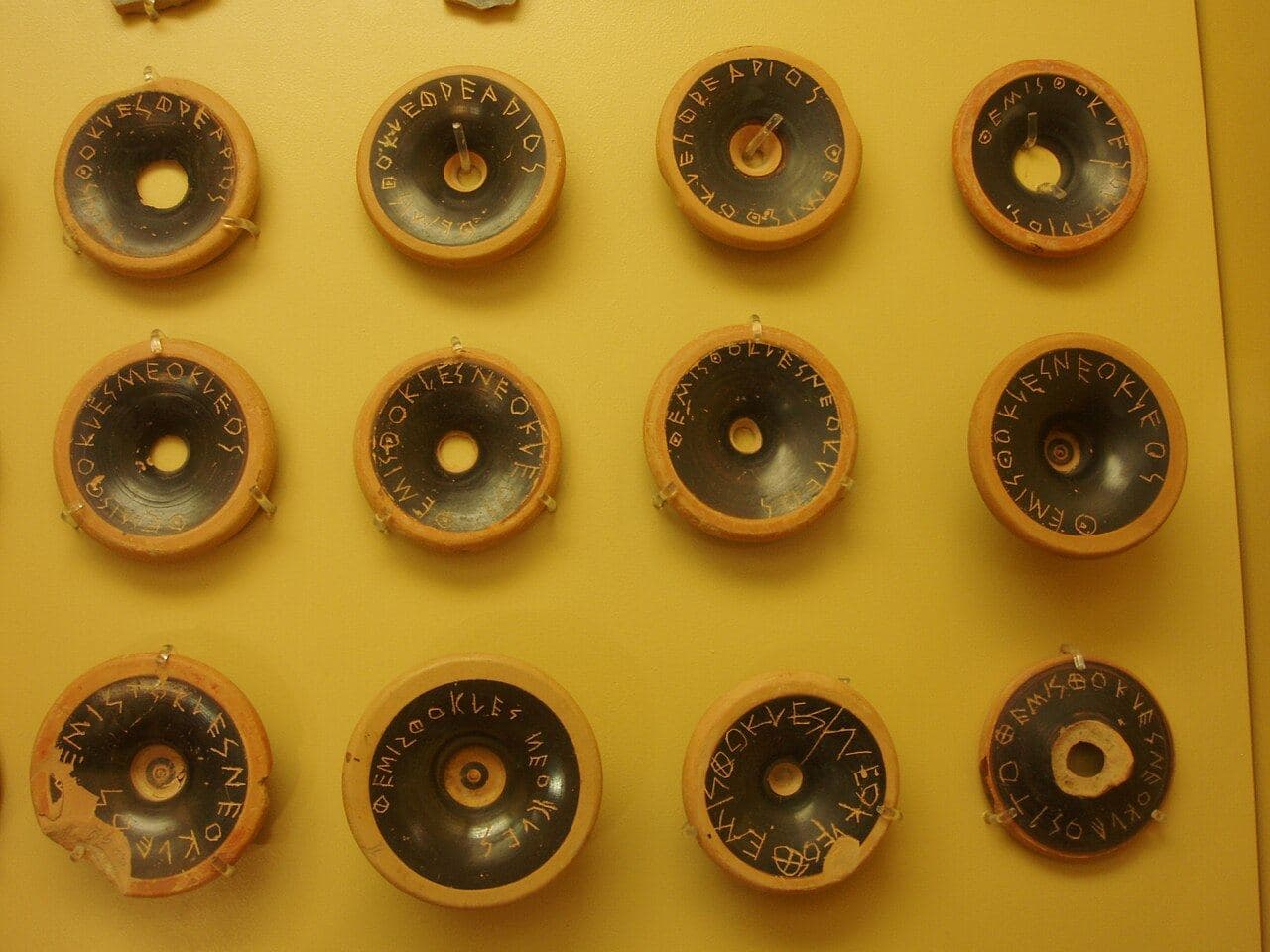
- c. 471 BCOstracised by the Athenians; spends ten years' exile at Argos
- c. 469 BCAccused of treason alongside the Spartan Pausanias; flees through Corcyra and Epirus
- c. 465 BCReaches the Persian court of the newly crowned King Artaxerxes I
- c. 464 BCGranted Magnesia, Lampsacus and Myus by the king; governs from Magnesia
- c. 459 BCDies at Magnesia; Thucydides says of illness
Early Life
Themistocles was born in Athens around 524 BC — a date no record states outright, but one modern historians back-calculate from Plutarch's claim that he died "in his sixty-fifth year." His father, Neocles, was an Athenian citizen of the deme Phrearrhioi, a coastal district some thirty kilometres south-east of the city. His mother was not Athenian at all. Ancient writers could not agree on where she was from — Thracian, Carian, or Acarnanian, depending on which source you read — which tells us less about her homeland than about how little anyone really knew, or cared to record, about the mother of a man who would later be accused of selling out Greece.
Plutarch, writing nearly six hundred years later, collects the kind of childhood stories every great man accumulates after the fact: a schoolmaster who predicted he'd be "either a very good or a very bad man," a boy who admitted he couldn't tune a lyre but boasted he could make a small city great. Plutarch himself doubts the darker tales — that his father disinherited him, that his mother killed herself from the shame of it — and so should we. These are legends dressing up a simple truth: he came from the edges of Athenian society, son of a citizen and an outsider, and he had everything to prove.
What is solid is his clan. The Lycomidae, an old Athenian family, claimed him as a member, and he later rebuilt their shrine at Phlya after the Persians burned it — a debt paid, and a mark of how far outside the first rank he'd started.
The Silver Fleet
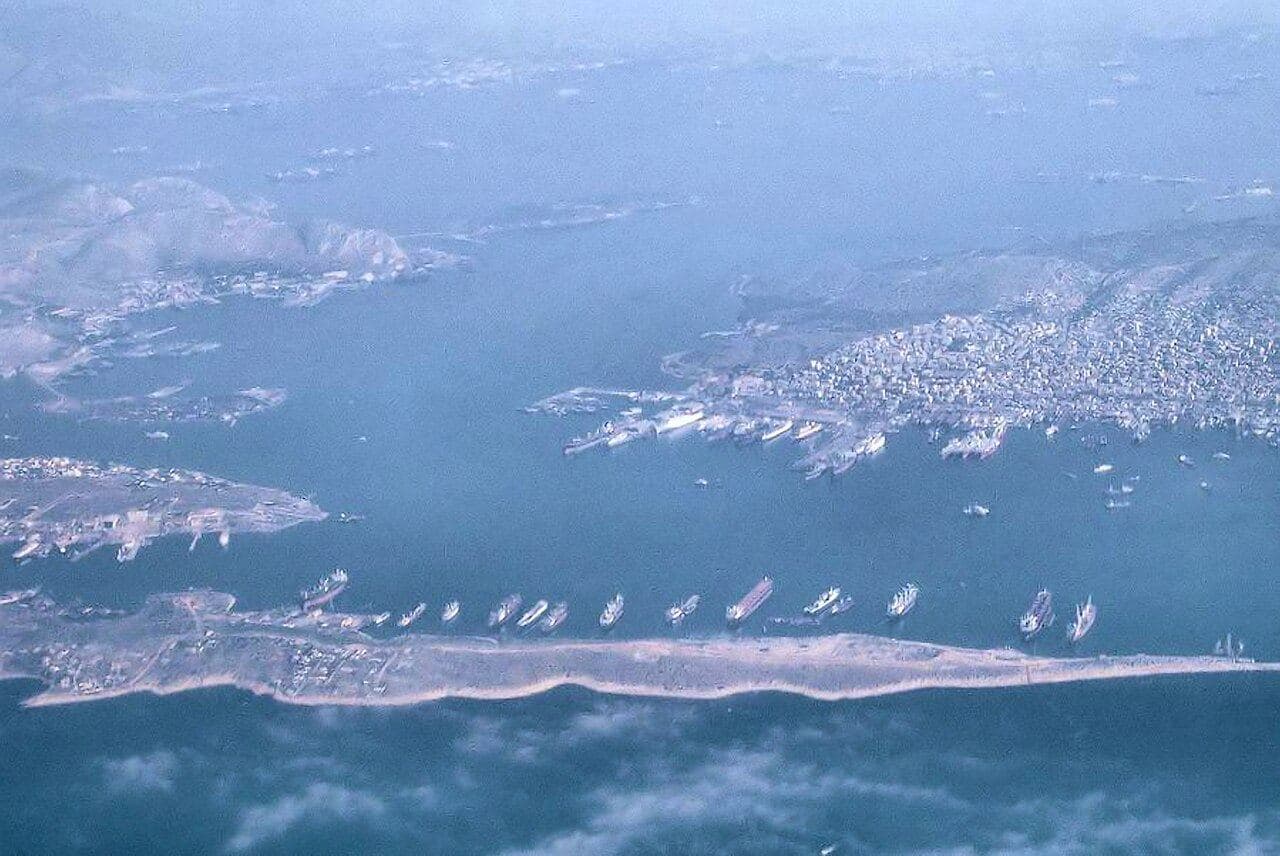
Athens in the 490s and 480s BC was a city arguing with itself over how much to fear Persia, which had already tried and failed to conquer Greece once, at Marathon in 490. Themistocles served as archon — one of the city's chief magistrates — around 493 BC, and used the office to begin fortifying Piraeus, the rocky harbour south-west of Athens that had far better anchorage than the open beach the city had used before. It was a strange thing to spend money on unless you were already thinking about ships.
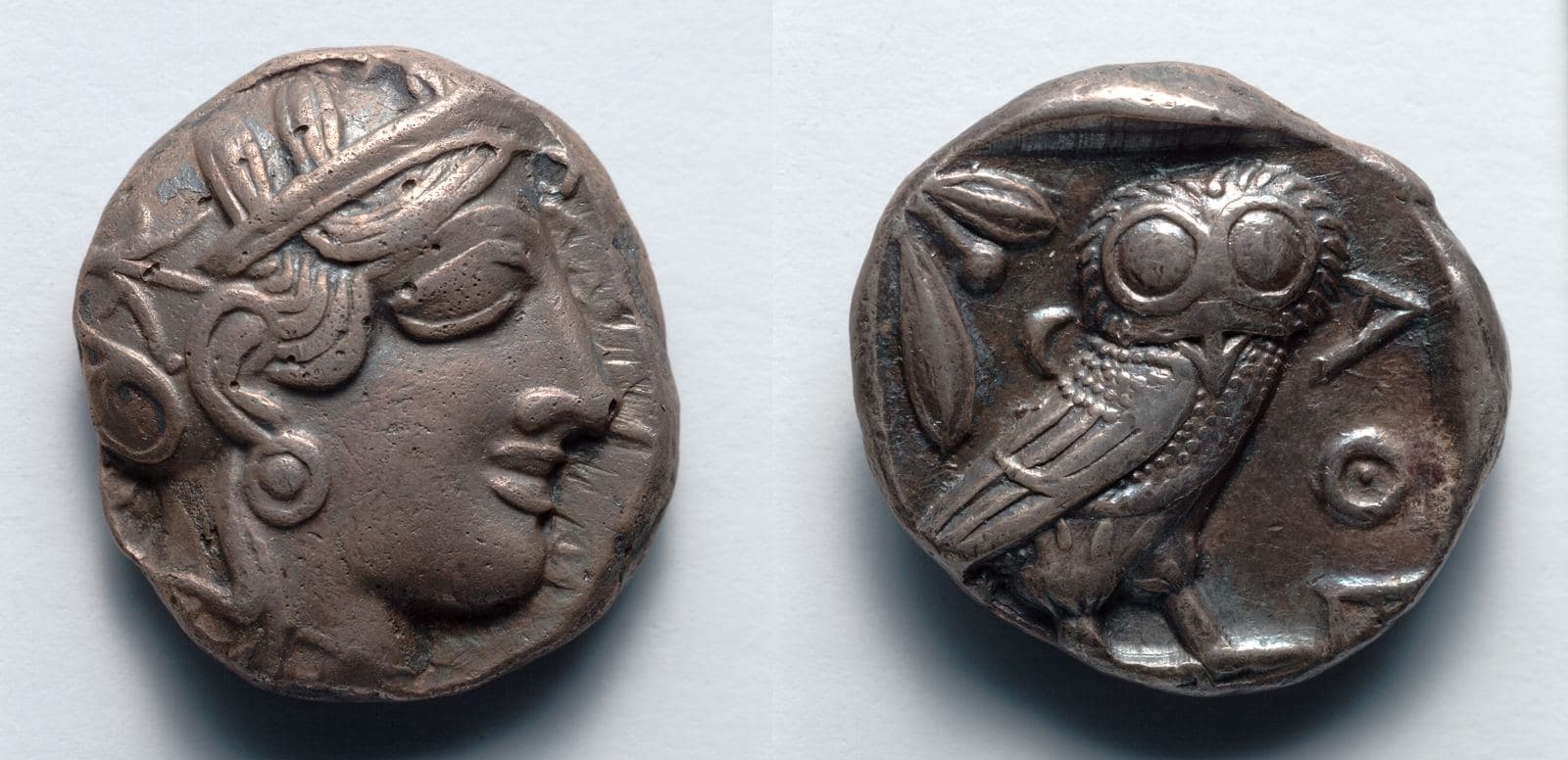
The turning point came in 483 BC. A rich new vein of silver was struck at Laurion, in the mines south-east of Athens, and the city debated simply dividing the windfall among its citizens — ten drachmas each, Herodotus says. Themistocles talked them out of it. Build ships instead, he argued, ostensibly for a long-running war with the island of Aegina. The ancient sources disagree on the exact mechanics — Herodotus says two hundred ships were planned, the philosopher Aristotle's school says one hundred were built by lending the money to Athens's richest citizens — but the result, however it was financed, was the core of the fleet that fought at Salamis three years later.
It is hard to overstate how strange this looked at the time. Athens had been a land power, its status built on hoplites fighting in the phalanx — solid citizens standing shoulder to shoulder. A navy meant thousands of poorer Athenians at the oars instead, and ancient critics, echoed by some modern historians, argued that Themistocles' fleet quietly shifted the balance of Athenian democracy toward the poor who rowed it. Whether or not he foresaw that, he had built, almost by accident, the instrument that would both save Greece and remake Athens.
Salamis
By late summer 480 BC, Xerxes' army had marched into Greece, broken the Spartan stand at Thermopylae, and burned an evacuated Athens to the ground. The Athenian people were crowded onto the island of Salamis and the mainland towns of Troezen and Aegina, watching their city burn from across the water. The combined Greek fleet — some 380 ships, Herodotus counts, the largest contingent Athenian — sat in the strait at Salamis under the nominal command of the Spartan Eurybiades, while the Peloponnesian commanders argued for retreating to defend the Isthmus of Corinth instead.
Themistocles' argument, recorded by Herodotus, was simple and correct: a narrow strait favoured the smaller, more manoeuvrable Greek fleet, while open water favoured Persian numbers. When the Corinthian commander Adeimantus sneered that a man without a city — Athens was, after all, in enemy hands — had no standing to speak, Themistocles shot back that Athens, "so long as it had two hundred ships fully manned," was a greater city and land than Corinth. It is the best-attested of his one-liners, and a far better bet than the more famous "Strike, but hear me," which comes only from Plutarch, half a millennium later.
When the Greek commanders wavered again, Themistocles took matters into his own hands. He secretly sent his children's tutor, Sicinnus, to the Persian camp with a message: the Greeks were frightened and about to flee, and now was the moment to strike. It worked exactly as he hoped — the earliest evidence we have, the playwright Aeschylus, who probably fought in the battle himself, stages a near-identical warning reaching Xerxes within eight years of the event. The Persian fleet moved overnight to block both exits from the strait, trapping the Greeks and forcing the very battle Themistocles wanted.
The battle itself, fought in the narrows, went exactly as he had predicted. The larger Persian fleet, crammed into too little water, lost formation and fouled itself; the Greeks picked the wreckage apart. Xerxes, watching from a throne on the mainland shore, saw his navy broken in an afternoon. He retreated to Asia soon after, leaving his general Mardonius to be defeated on land at Plataea the following year. Modern historians rate Salamis as the battle that stopped the Persian invasion of Greece — a judgement about its importance, not a fact in itself, but a well-supported one.
The Flight to Persia
Athens did not thank him for long. Within a decade, his rivals had turned the city against him: he was ostracised around 471 BC, a formal ten-year exile that carried no criminal charge, and he settled in Argos. Then came something far more dangerous. Evidence surfaced implicating the disgraced Spartan regent Pausanias in secret dealings with Persia — and Themistocles was named as an accomplice. Sparta demanded Athens punish him too. Athens sent men to arrest him.
What followed is one of the great flights of the ancient world, and we owe almost all of it to Thucydides, writing within living memory of the events. From Argos, Themistocles fled to Corcyra — modern Corfu — which owed him a favour from an old arbitration. Too afraid of Athens and Sparta to shelter him outright, the Corcyraeans ferried him to the mainland, where he threw himself on the mercy of King Admetus of the Molossians in Epirus, a ruler he had once personally offended. Finding Admetus away, Themistocles took the king's own child in his arms and sat at the hearth — the most binding act of supplication in Greek custom. When Admetus returned, he honoured it, and refused to hand his old enemy over.
From there Admetus sent him overland across the mountains to Pydna, on the Macedonian coast, where he boarded a merchant ship bound for Ionia. A storm blew the ship straight toward an Athenian naval squadron blockading the island of Naxos. Unrecognized, Themistocles told the ship's captain exactly who he was carrying — and what he would say if handed over — and the captain, more afraid of the threat than tempted by the reward, held the ship back from the blockade for a day and a night before landing him safely at Ephesus. From there he travelled inland and wrote to the new Persian king, Artaxerxes I, asking for a year's grace to present himself at court. He spent that year learning the Persian language and customs, and was received, Thucydides says, with "very high consideration... such as no Hellene has ever possessed before or since."
Later writers dressed this journey up considerably — a curtained wagon disguising him as a royal concubine, a king crying out in his sleep "I have got Themistocles the Athenian!", a fortune in silver on his head. These make good stories. None of them come from Thucydides, and none should be mistaken for the record.
Death & Legacy
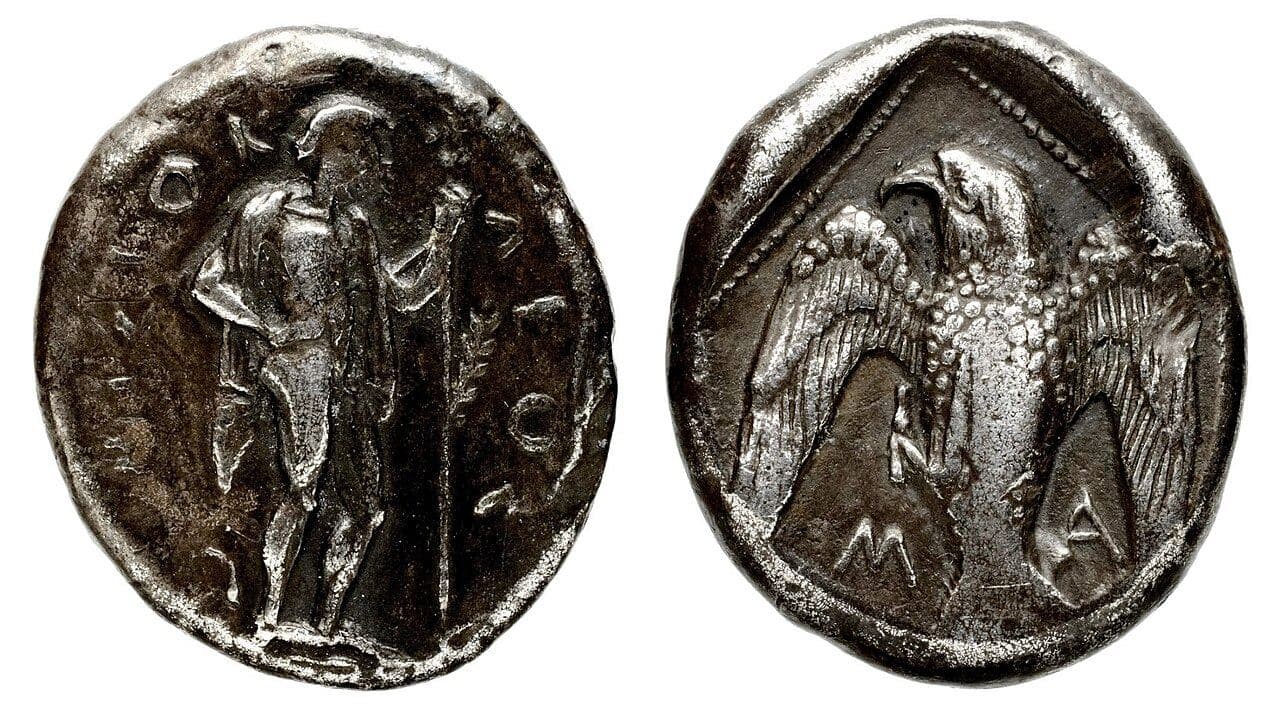
Artaxerxes gave Themistocles the governorship of Magnesia on the Maeander, in what is now western Turkey, along with the revenues of two neighbouring towns to cover his bread, wine and provisions. He struck his own silver coinage there, reading simply "of Themistocles" — one of the earliest Greek coins to carry a living individual's name rather than a city's, and the only object that survives bearing his direct authority. He governed Magnesia for perhaps five years, and his son Archeptolis succeeded him there, as later coins confirm.
He died at Magnesia around 459 BC. Thucydides, our earliest and most sober source, is unambiguous: "Disease was the real cause of his death, though there is a story of his having ended his life by poison, on finding himself unable to fulfil his promises to the king." That is the whole of it — a rumour, reported and set aside.
The far more famous version has him drinking bull's blood rather than lead a Persian army against the Greece he had saved — a patriotic suicide, dramatic and absolute. It is a powerful story, and it is a legend. It was already circulating as a dark joke in Athens by 424 BC, in Aristophanes' comedy Knights, barely thirty-five years after his death — so something like it was in the air early. But the version with the bull's blood and the patriotic motive only appears in writers working three to five centuries after the fact, and even the Romans were skeptical: the orator Cicero, writing in 46 BC, accused earlier historians of simply inventing a dramatic death because "the ordinary death gave them no material for ornament." Choose the version you like for the campfire. For the record, trust Thucydides: he died of illness, in a foreign province, loaded with honours by the empire he had once defeated at sea.
No portrait made in his lifetime survives. A Roman-era marble herm inscribed with his name, found at Ostia in 1939, is often reproduced as his face — but it is a later copy of an original whose date nobody can pin down with confidence, and no public-domain photograph of it exists for a page like this one to use honestly. What we do have, instead, are the ostraka: broken pieces of pottery that ordinary Athenians scratched with his name and cast into the vote that sent him away. They are the rawest surviving evidence of what Athenian democracy actually felt about the man who saved it — gratitude that curdled, in under a decade, into suspicion and exile.