- Born
- c. AD 215Not recorded — probably somewhere in Fars, Persia · now Probably Fars Province, Iran (uncertain)
- Died
- AD 270Most likely Bishapur, Persia · now near Kazerun, Fars Province, Iran
- Known for
- Capturing the Roman emperor Valerian alive in 260 — the first time any Roman emperor had been taken prisoner
- People
- Sasanian Persian — Zoroastrian royal elite of the newly founded Sasanian Empire, which claimed to restore Iranian rule after four centuries of Parthian and Greek-inflected kingship
- Spouse
- Khwarranzem — named as a wife in some sources, but the evidence is thin
- Children
- Hormizd I — succeeded him as King of KingsBahram I — later became King of Kings in turnNarseh — later became King of Kings in turnShapur, called the Mishanshah — king of Mesene (Maishan); predeceased his fatherAdur-Anahid — a daughter whose title "queen" one scholar reads, disputed by others, as evidence of a father-daughter marriage
“We made prisoner ourselves with our own hands Valerian Caesar and the others, chiefs of that army, the praetorian prefect, senators; we made all prisoners and deported them to Persis”
Shapur I's own trilingual inscription, the Res Gestae Divi Saporis (ŠKZ), carved on the Ka'ba-ye Zartosht, Naqsh-e Rostam, c. 262 AD — his own words, not a later retelling
Milestones
- c. AD 215Born, probably somewhere in Fars — no source records the year or the place
- AD 224His father, Ardashir I, overthrows the last Parthian king and founds the Sasanian dynasty
- AD 240Crowned co-regent with Ardashir I on 12 April
- AD 242Becomes sole "King of Kings" on Ardashir's death; turns to securing the eastern frontier
- AD 244Kills or defeats Gordian III; Philip the Arab buys peace with a heavy indemnity
- c. AD 253Destroys a Roman army at Barbalissos and sacks Antioch, Rome's third-greatest city
- AD 260Captures the emperor Valerian alive at the Battle of Edessa — a first in Roman history
- c. AD 262Has his victories cut in his own words into the trilingual Res Gestae Divi Saporis
- c. AD 267Loses most of his western conquests to Odaenathus of Palmyra, fighting in Rome's name
- AD 270Dies, most likely at Bishapur; succeeded by his son Hormizd I
Early Life
No source records the year Shapur was born, or where. Modern historians place it sometime in the 210s AD — a back-calculated guess from the fact that he already appears as a grown warrior on his father's own monuments by the 220s and 230s, not a date any ancient text actually gives. What is solid is his family: he was the son of Ardashir I, a provincial nobleman from Fars who overthrew the last Parthian king, Artabanus IV, in 224 AD and founded the Sasanian dynasty — a new Persian empire that presented itself as a restoration of ancient Iranian kingship after four centuries of Parthian and Greek-tinged rule.
Shapur grew up in that project. He rode with his father's armies against the last Parthian holdouts, and on 12 April 240 AD, Ardashir crowned him co-regent. When Ardashir died two years later, Shapur became sole "King of Kings" of an empire still being stitched together. He spent his first years on the throne doing exactly that: subduing hill peoples around the Caspian, annexing Khwarazm, and pushing Sasanian authority east into old Kushan territory, as far — by his own later account — as Peshawar. He placed his own sons as sub-kings across this patchwork, a genuine Sasanian practice for holding a young empire together.
A mother's name, disputed
Even his mother's name is argued over. A semi-legendary Middle Persian court epic calls her Denag and makes her Ardashir's own niece or wife, depending on which manuscript you read; other inscriptions name a mother called Murrod instead. The epic also gives Ardashir himself a miraculous-birth story, which is a useful warning sign: it is court literature, not a neutral family record, and modern historians treat Sasanian royal genealogy at this distance as only partly recoverable. The honest answer is that we do not know.
Wars & Achievements
Shapur fought Rome three times, and won the most of any Sasanian king before or after him. The first war, against the boy-emperor Gordian III, ended at the Battle of Misiche in 244 — Shapur's own inscription says he killed Gordian in the fighting; the Roman tradition, less flattering to itself, says Gordian died of illness or was murdered by his own mutinous troops. Nobody can fully settle which account is self-serving propaganda and which is face-saving spin, and the Atlas treats it as a genuine open dispute rather than picking a winner. What is certain is the outcome: Gordian's successor, Philip the Arab, bought peace in 244 with a heavy indemnity and effective Persian control of Armenia, then minted coins boasting of "peace established with the Persians" — a line later Roman writers, and most modern historians, read as covering up a humiliating payoff.
Rome broke that peace within a decade. Around 252–253, Shapur's forces annihilated a Roman army — 60,000 dead, by his own inscription's count, a figure to treat as the rough scale of a catastrophe rather than a precise census — at the Battle of Barbalissos, then marched on and sacked Antioch, the third-largest city in the Roman world. It was the opening act of an even larger war to come.
The Captive Emperor
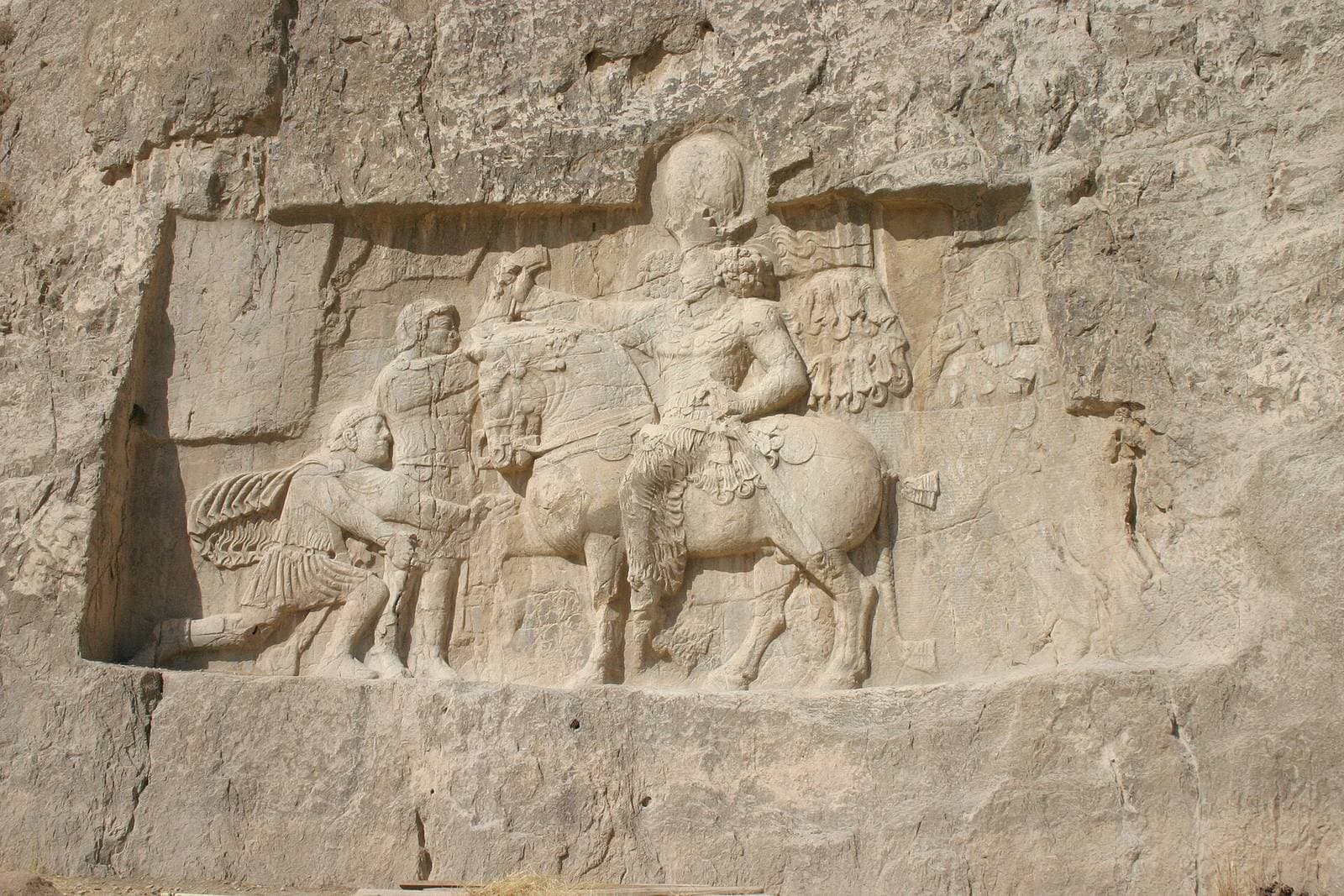
In 260 AD, the emperor Valerian marched east in person to stop him. Near Edessa, Shapur's army broke the Roman force and took Valerian alive — the first time in Roman history a sitting emperor had fallen into enemy hands. Shapur had the moment of his triumph carved into a cliff at Naqsh-e Rostam, where it still is: the king on horseback, gripping Valerian's wrist. He also had the whole campaign written up in his own voice, in three languages at once — Middle Persian, Parthian, and Greek — on a stone tower called the Ka'ba-ye Zartosht. In Shapur's own words: "We made prisoner ourselves with our own hands Valerian Caesar and the others, chiefs of that army, the praetorian prefect, senators; we made all prisoners and deported them to Persis." That is the full extent of what Shapur's own contemporary record says happened to Valerian — a battle won, an emperor and his staff captured, captives marched off to settle new cities in Persis. Nothing about what came next.
The story most people have actually heard is far more lurid, and it comes from somewhere else entirely. Two generations later, the Christian writer Lactantius — writing around 313–315 AD, decades after the fact, to make the point that God punishes the persecutors of Christians (Valerian had launched one shortly before his capture) — wrote that Shapur forced Valerian to kneel as a human mounting-step whenever the king needed to climb onto his horse, and that after Valerian died in captivity, his skin was flayed, dyed red, and hung in a Persian temple as a trophy. A similar tale survives in later Byzantine tradition. This is the legend almost everyone knows, and it is worth saying plainly: it appears nowhere in Shapur's own record. Lactantius was a child when Valerian was captured, wrote with an openly stated religious argument to make, and is the earliest source for every gruesome detail.
Modern historians are genuinely split on how much of it to believe. The skeptical majority — including the specialist Erich Kettenhofen and the sourcebook compilers Dodgeon and Lieu — treat the footstool-and-flaying story as later Christian invective, unsupported by Shapur's own plain account of a battle and a deportation. A smaller camp allows that some real, lesser act of ritual humiliation might sit underneath the legend, since Shapur's own relief art does show him physically gripping a captive king's wrist — triumphal imagery with real teeth, even if nothing as theatrical as what Lactantius describes. No historian treats the flaying detail itself as established fact. The Atlas follows the inscription — Shapur's own first-person record — as the solid ground, and names the legend as exactly that: a story told by his enemies, two generations on, for their own reasons.
Building an Empire
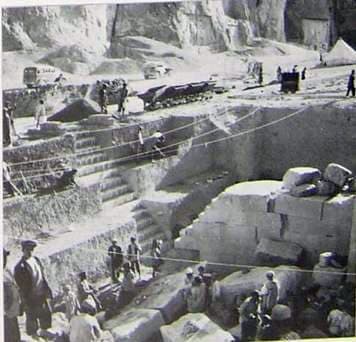
Shapur's wars paid for a building program as ambitious as his battles. He founded Bishapur, in Fars, and later tradition — resting on Islamic-era historians drawing on Sasanian material, not on a contemporary witness — credits Roman prisoners taken at Edessa with the labor. A few kilometers away, in a cave near the city, his own portrait was cut straight from a living stalagmite: 6.7 meters tall, the largest such sculpture to survive from his reign. It fell at some point in the following centuries, probably to an earthquake, and lay broken on the cave floor until Iran's last Shah had it re-erected by military engineers in 1957–58 — which means the standing statue visitors see today is ancient carving finished with twentieth-century repair, not solely ancient work.
He ran his empire's religious life with the same mix of patronage and pragmatism. Shapur called himself "Mazda-worshipping" in his own inscription and funded Zoroastrian fire temples and clergy. At the very same court, he gave protection for decades to Mani, the founder of a rival faith, Manichaeism, who had dedicated a book to him in an open bid for royal favor. Shapur never converted, but he shielded Mani for the rest of his own reign — a tolerance that evaporated the moment he died, when the Zoroastrian priesthood he had funded turned on Mani under his successor. The Babylonian Talmud remembers Shapur fondly too, as a king on easy terms with the Jewish community of Mesopotamia. One modern scholar has called him a "lukewarm Zoroastrian" to capture the mix — a generous patron of one religious establishment while personally sheltering the rival prophet that same establishment would later have killed.
Death & Legacy
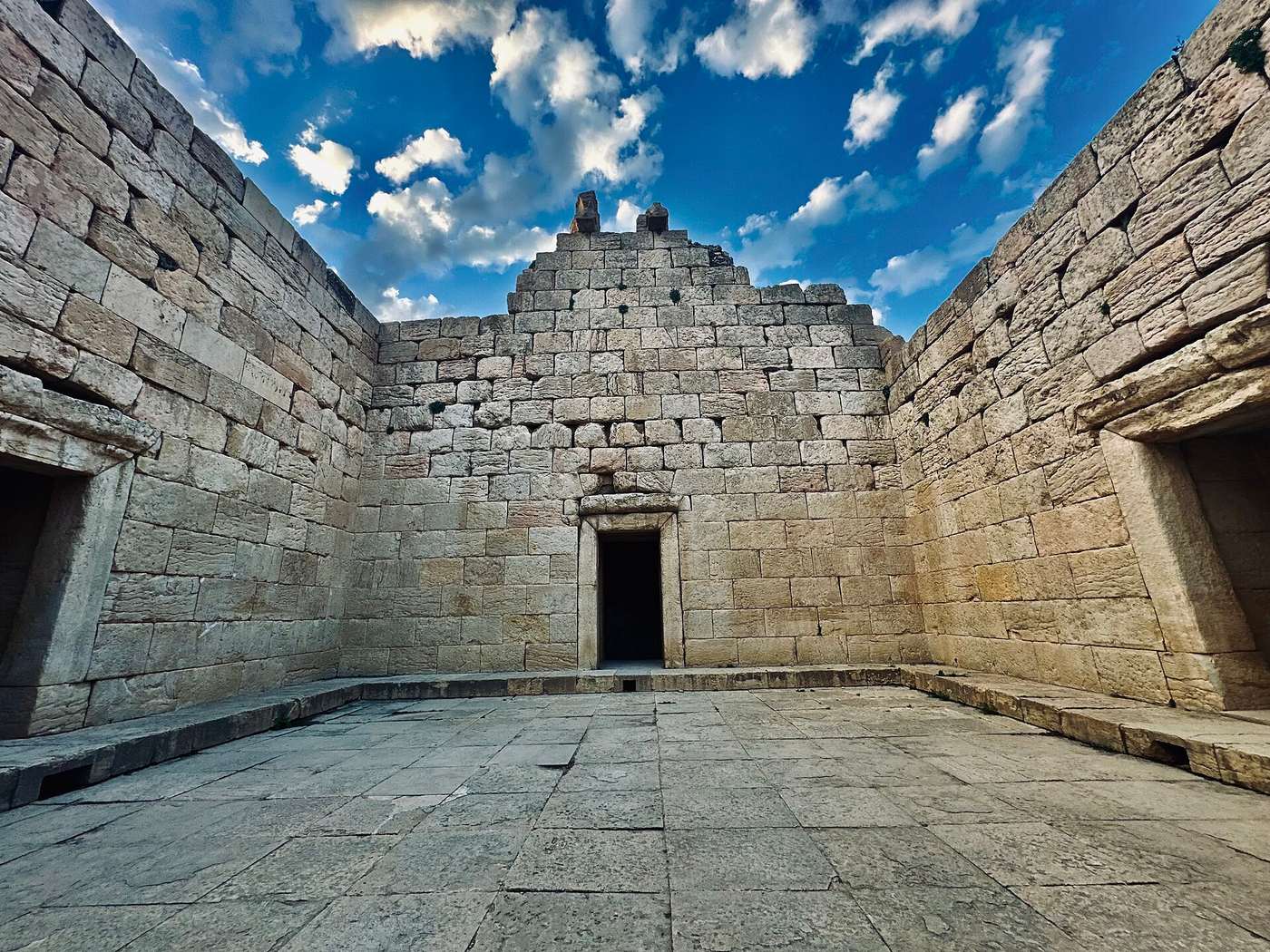
Shapur died in May 270 AD, most likely at Bishapur, though no source pins down the exact place with certainty. He left the throne to his son Hormizd I — and, remarkably, two other sons, Bahram I and Narseh, would each later hold the same title in turn, an unusual run even by Sasanian standards. His western conquests did not outlast him either: a few years after Edessa, the ruler of Palmyra, Odaenathus, fighting in Rome's name, had already driven Persian forces back out of Nisibis, Carrhae, and Edessa itself. The territory did not stay won. The propaganda did.
That is Shapur's real legacy: not a lasting empire stretching into Roman Syria, but an image that outlived every battlefield reversal — a Roman emperor, captured alive, carved into a Persian cliff in Shapur's own lifetime, with his own words beside it in three languages so that no one, Persian, Parthian, or Roman, could mistake what had happened. Everything more dramatic than that — the footstool, the flaying — belongs to the men who came after, telling the story for their own purposes. Shapur did not need to embellish it. He had the stone.