- Born
- c. 770 BCNapata, Kingdom of Kush · now near Karima, Northern State, Sudan
- Died
- c. 716 BCNapata, Kingdom of Kush · now near Karima, Northern State, Sudan
- Known for
- Marching a Kushite army north from Napata to conquer all of Egypt, founding its 25th Dynasty
- People
- Kushite (Nubian) — from the Kingdom of Kush, centered on Napata on the Nile in what is now northern Sudan; a civilization that shared Egypt's religion, especially the cult of Amun, but kept its own royal line, culture, and (later) its own script
- Spouses
- Tabiry — a principal wife, thinly attested in her own rightAbar — mother of Piye's son and eventual successor TaharqaKhensa — named as a royal wife on later Kushite monumentsPeksater — named as a royal wife on later Kushite monuments
- Children
- Taharqa — son by Abar; later pharaoh of the 25th Dynasty, c. 690–664 BCShebitku — son (possibly nephew; sources are not fully consistent), later kingShepenupet II — daughter, installed decades later as God's Wife of Amun at ThebesQalhata — daughter, later a royal wife of Shabaka and mother of Tanutamani
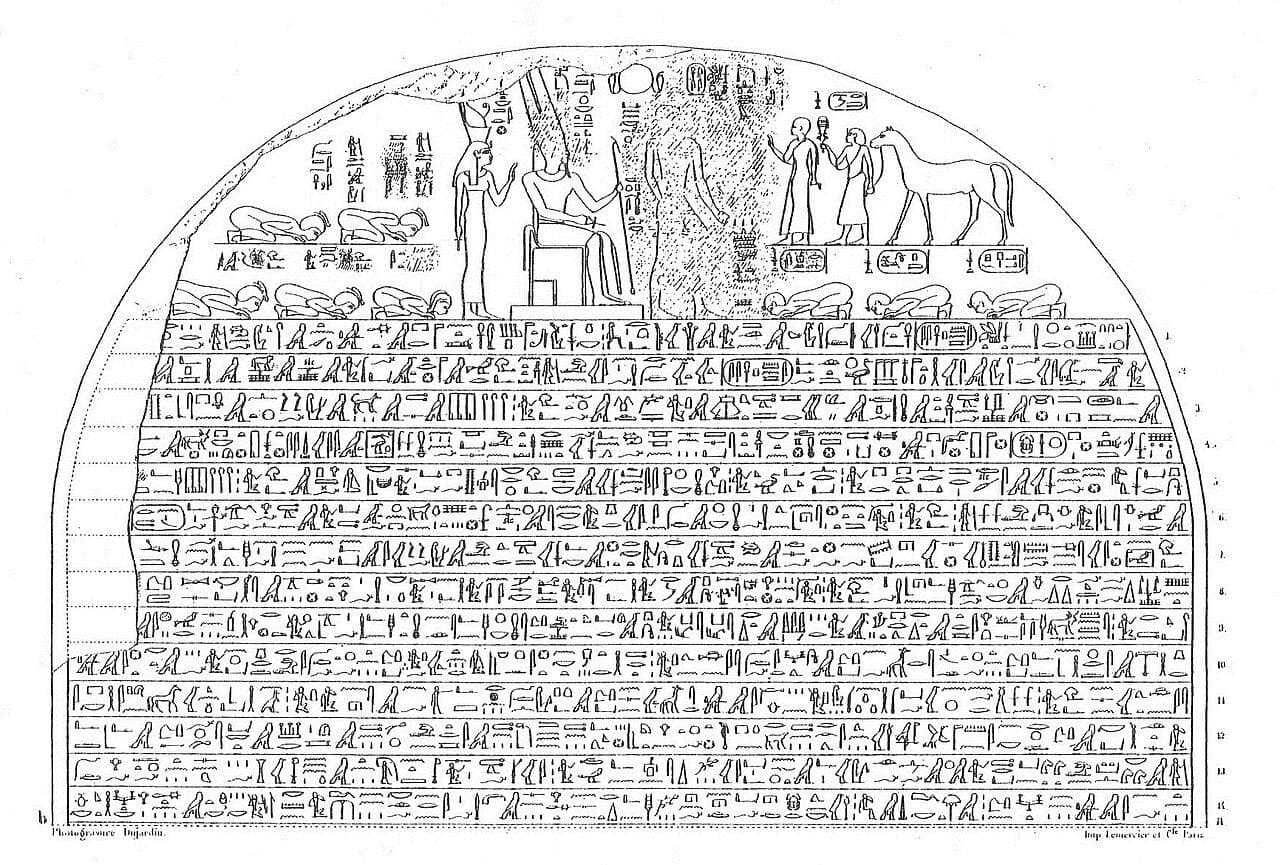
“How much more painful it is in my heart that my horses have been starved than any other crime that you have committed at your discretion”
The Great Triumphal Stele of Piye (Gebel Barkal, Egyptian Museum Cairo JE 48862), trans. Robert K. Ritner, The Libyan Anarchy (2009)
Milestones
- c. 770 BCBorn, almost certainly at Napata, son of Kashta, king of Kush — the year itself is a modern estimate, not a recorded date
- c. 747 BCBecomes king of Kush on Kashta's death, ruling from Napata beneath the sacred mountain of Jebel Barkal
- c. 728 BCMarches his army north from Napata after Tefnakht of Sais threatens Kushite-held territory in Egypt
- c. 728 BCBesieges and takes Hermopolis, then storms Memphis from the river "like a cloudburst"
- c. 728 BCReceives the Delta kings' submission at Memphis, but refuses to admit the ritually "unclean" into his presence
- c. 727 BCSails home to Napata, having conquered Egypt — and never returns there again
- c. 716 BCDies and is buried at El-Kurru in a pyramid tomb, with four horses sacrificed and buried beside it
Early Life & the Throne of Kush
Nothing about Piye's childhood survives — not his birth year, not a single anecdote. What we do know comes from later inscriptions and modern back-calculation: he was a son of Kashta, king of Kush, and he almost certainly grew up at Napata, the Kushite capital on a great bend of the Nile beneath a flat-topped sandstone mountain called Jebel Barkal. The Kushites and the Egyptians to their north had traded, fought, intermarried, and worshipped many of the same gods for well over a thousand years by Piye's time. Kush was not a colony of Egypt or a copy of it — it had its own royal line, its own customs (including, as his burial would later show, its own reverence for horses), and eventually its own writing system — but its religious life ran on largely Egyptian terms, above all the cult of Amun, whom Piye's dynasty would treat as the true source of Kushite kingship.
Kashta had already extended Kushite influence deep into Upper Egypt, going so far as to install his daughter as God's Wife of Amun-elect at Thebes — a foothold in Egypt's most important religious office. When Kashta died, probably around 747 BC, Piye inherited both a kingdom and a claim on Egypt that his father had only begun to press.
The March North
The trigger was Tefnakht, a prince of Sais in the western Nile Delta, who built a coalition of Delta and Middle Egyptian rulers and pushed south against Kushite-aligned territory. Egypt at this point was not one kingdom but several — a patchwork of competing local dynasts, a legacy of centuries of political fragmentation. Piye's own forces in Egypt tried to hold the line; unsatisfied with how the fight was going, Piye marched north himself, and what followed is recorded on his own monument in unusual, vivid detail.
At Hermopolis, Piye's army encircled the city of King Namlot, built elevated platforms for archers and slingers, and simply waited the defenders out — the stele says days passed until the city "became foul to the nose, deprived of its ability to breathe." It surrendered after Namlot's wife and the women of his court appealed directly to Piye's own queens. At Memphis, Piye's forces used the Nile's flood-season height to bring ships directly against the city walls and stormed the ramparts from the decks; the city fell, in the stele's words, "like a cloudburst."
What happened next is the passage that makes this monument unlike almost any other Egyptian royal inscription. As Egypt's defeated rulers came to submit, several were refused an audience — the stele says they were "uncircumcised… eaters of fish… an abomination to the palace" — while King Namlot, described as ritually pure, was admitted. And touring Namlot's stables afterward, Piye is shown reacting with more open distress at the starved condition of the horses than at anything Namlot himself had done: "how much more painful it is in my heart that my horses have been starved than any other crime that you have committed." It's one line on a very long, very self-glorifying monument — but it has stuck for a reason, and it lines up with real archaeological evidence that horses held serious cultural weight in Kushite royal life (his own burial would prove that beyond doubt).
Achievements: Unifying Two Kingdoms
By the campaign's end — conventionally placed around 728–727 BC — Piye held real authority over the whole of Egypt, from the Delta to the First Cataract, joined to his own Kingdom of Kush. It was the first time in centuries anyone had unified the two lands, and Piye is conventionally regarded as the founder of Egypt's Twenty-fifth Dynasty, ruled by a line of Kushite kings for roughly the next century.
The whole campaign, in Piye's own telling, was fought in the name of Amun — not personal ambition, but divine will. That devotion was not just rhetoric: Piye rebuilt and significantly expanded the Great Temple of Amun at Jebel Barkal, a site both Kushites and Egyptians already treated as one of the god's true earthly homes. It became, and would remain for generations of his successors, the religious anchor of Kushite kingship — an identity built in Egyptian architectural language but on Kushite ground, under Kushite kings.
The Puzzle of the Withdrawal
Here is the strange part. After receiving Egypt's submission, Piye did not stay. He sailed south to Thebes, and from there home to Napata — and, as far as the record shows, never set foot in Egypt again for the rest of his reign. He left the men he had just defeated, Tefnakht included, in place as tributary rulers rather than replacing them with Kushite governors.
Historians genuinely disagree about why, and this dossier's research (see the full dossier, linked in the Sources page) lays out the live positions rather than picking a winner: that Piye's goal from the start was tribute and religious vindication, not territorial occupation; that Egypt's fractured, diminished state simply wasn't worth the cost of direct rule; or that his own kingship was so tied to Amun of Jebel Barkal specifically that staying in Egypt would have meant abandoning the religious foundation of his own throne. What's notable is that his successors didn't repeat the choice — within a generation, Kushite kings would rule Egypt far more directly, eventually residing there. Whatever Piye's reasoning, it wasn't the only workable one.
Death & Burial at El-Kurru
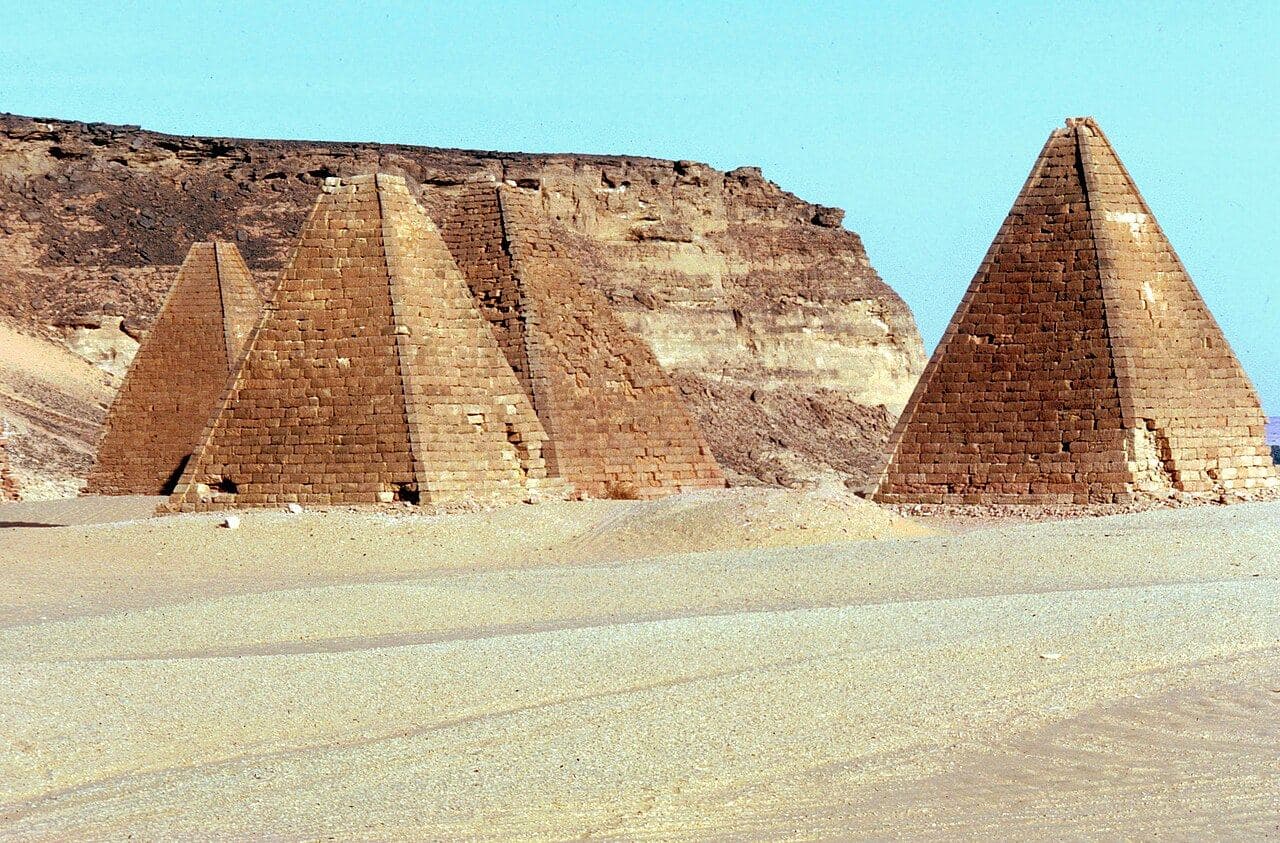
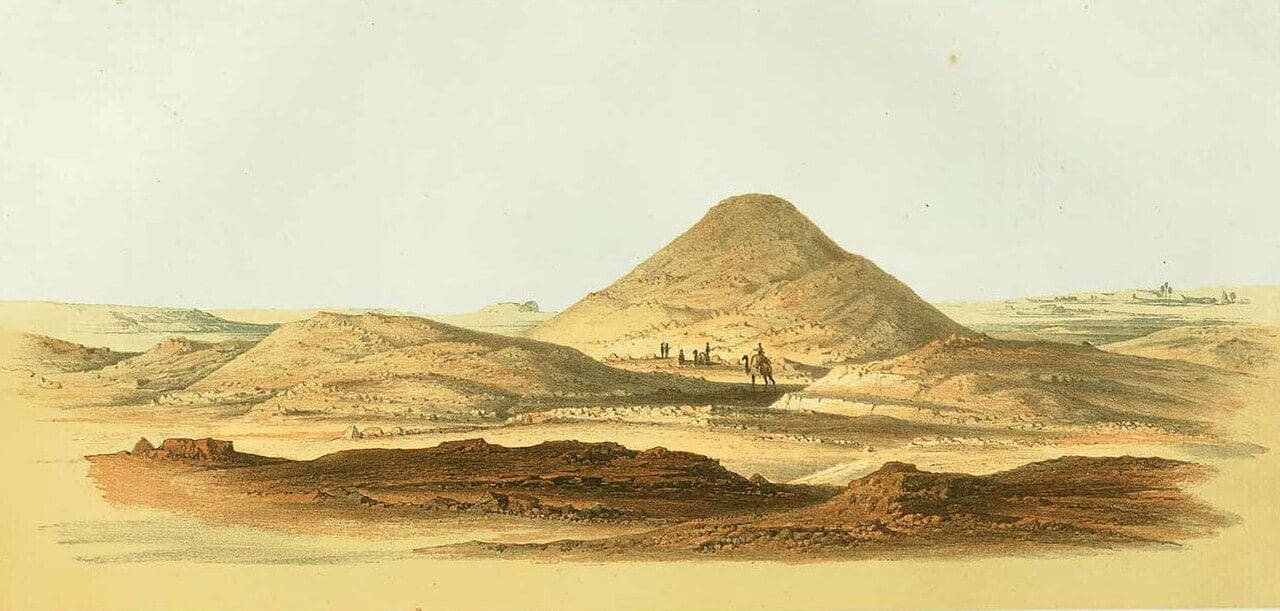
Piye died around 716 BC and was buried at El-Kurru, the earliest of the Kushite royal cemeteries near Napata, in a small, steep-sided pyramid built over a rock-cut burial chamber — Egyptian in outward form, like the temple at Jebel Barkal. What set the burial apart from any Egyptian pharaoh's was what lay beside it: four horses, sacrificed and interred near his tomb, a specifically Kushite royal rite with no Egyptian equivalent. Archaeologists (first Harvard and the Museum of Fine Arts, Boston's expedition under George Reisner in the early twentieth century) found the horse burials continued under Piye's successors at the later royal cemetery of Nuri — and the practice, taken together with the stele's own horse passage, makes a strong case that this wasn't sentiment. Horses mattered to Kushite kingship at a level Egypt's own royal tradition never quite matched.
Legacy: The Kushite Dynasty
Piye is remembered as the founding figure of Egypt's 25th Dynasty — later popularized, especially from the late twentieth century on, as the "Kushite Dynasty" or the "Black Pharaohs" (a modern label, not an ancient one, coined for a general readership rather than used by the Kushites themselves). His son Taharqa would become the dynasty's most powerful and best-attested king. Tradition holds that Piye was succeeded directly by Shabaka, then Shebitku, then Taharqa — the order this page follows, since it's still the version most general accounts print. It's worth knowing, though, that a meaningful body of more recent scholarship — reading the architecture of the royal pyramids at El-Kurru alongside newer textual evidence — argues the order actually ran Piye, then Shebitku, then Shabaka, then Taharqa. It's a live, technical, unresolved argument among specialists, not a settled fact either way, and it changes nothing about Piye's own achievement: a Kushite king who marched the length of the Nile, made himself ruler of Egypt, and then went home.