- Born
- c. 2300 BCAkkad (Agade), conventionally — her actual birthplace is unrecorded · now site never found, probably near Baghdad, Iraq
- Died
- c. 2240 BCUr (Urim), presumably — unrecorded · now Tell el-Muqayyar, Dhi Qar Governorate, Iraq
- Known for
- Hymns to the goddess Inana and the temples of Sumer and Akkad — the earliest literature history attributes to a named author
- People
- Akkadian — daughter of the Semitic-speaking dynasty of Sargon, installed as high priestess at the heart of Sumerian religion in conquered Ur
- Spouse
- None recorded — as en priestess she held the ritual title "wife of the god Nanna," the moon god
- Children
- None recorded
“The compiler of the tablets was En-hedu-ana. My king, something has been created that no one has created before.”
Colophon of the Temple Hymns, lines 543–544, as translated in the Electronic Text Corpus of Sumerian Literature (Oxford) — known only from copies made centuries after her death, and "compiler" is itself part of a live scholarly debate over what she actually wrote
Milestones
- c. 2300 BCBorn a daughter of Sargon of Akkad, the conqueror who built the first Mesopotamian empire (birth year and place unrecorded)
- c. 2285 BCAppointed by her father as high priestess of Nanna, the moon god, at conquered Ur
- c. 2279 BCSargon dies; she keeps her office through the reigns of her brothers Rimush and Manishtushu
- c. 2254 BCHer nephew Naram-Sin becomes king of Akkad
- c. 2250 BCThe rebel Lugal-Ane seizes Ur and drives her into exile — the story told in her own Exaltation of Inana
- c. 2245 BCRestored to office, scholars think, after Naram-Sin crushes the revolt — known only from the poem itself
- c. 2240 BCDies, date and place unrecorded; her grandniece Enmenana succeeds her
Princess of a Conquering House
Around 2300 BC, a daughter was born into the family of Sargon of Akkad — the king whose conquests built what historians generally call the first empire in Mesopotamian history. We don't know where she was born, or when exactly, or who her mother was. We don't even know her birth name: "Enheduanna" is a title taken on with an office, usually read as meaning something like "high priestess, ornament of heaven." Everything about her childhood is silence.
What is not silence is her father's record. Sargon's own inscriptions boast that he was "victorious over Ur in battle, conquered the city and destroyed its wall," then pushed his conquests as far as the sea. Ur was one of the oldest and most sacred cities in Sumer, and taking it by force did not make Sargon's Akkadian dynasty — Semitic-speaking newcomers from the north — welcome in the eyes of the Sumerian cities they now ruled. Sargon needed a way to bind the conquest together that armies alone couldn't provide.
His solution was his daughter. He installed her as en — high priestess — of Nanna, the moon god, at Ur: one of the most prestigious religious offices in the Sumerian world. Modern historians read this as calculated politics, tying the new northern dynasty to the oldest and holiest traditions of the people it had just conquered, though no inscription says so outright — it is the scholarly reading of an appointment the sources only describe, not explain. Whatever Sargon's precise reasoning, the move worked well enough that royal daughters held this same office for the next five centuries after her.
High Priestess of Ur
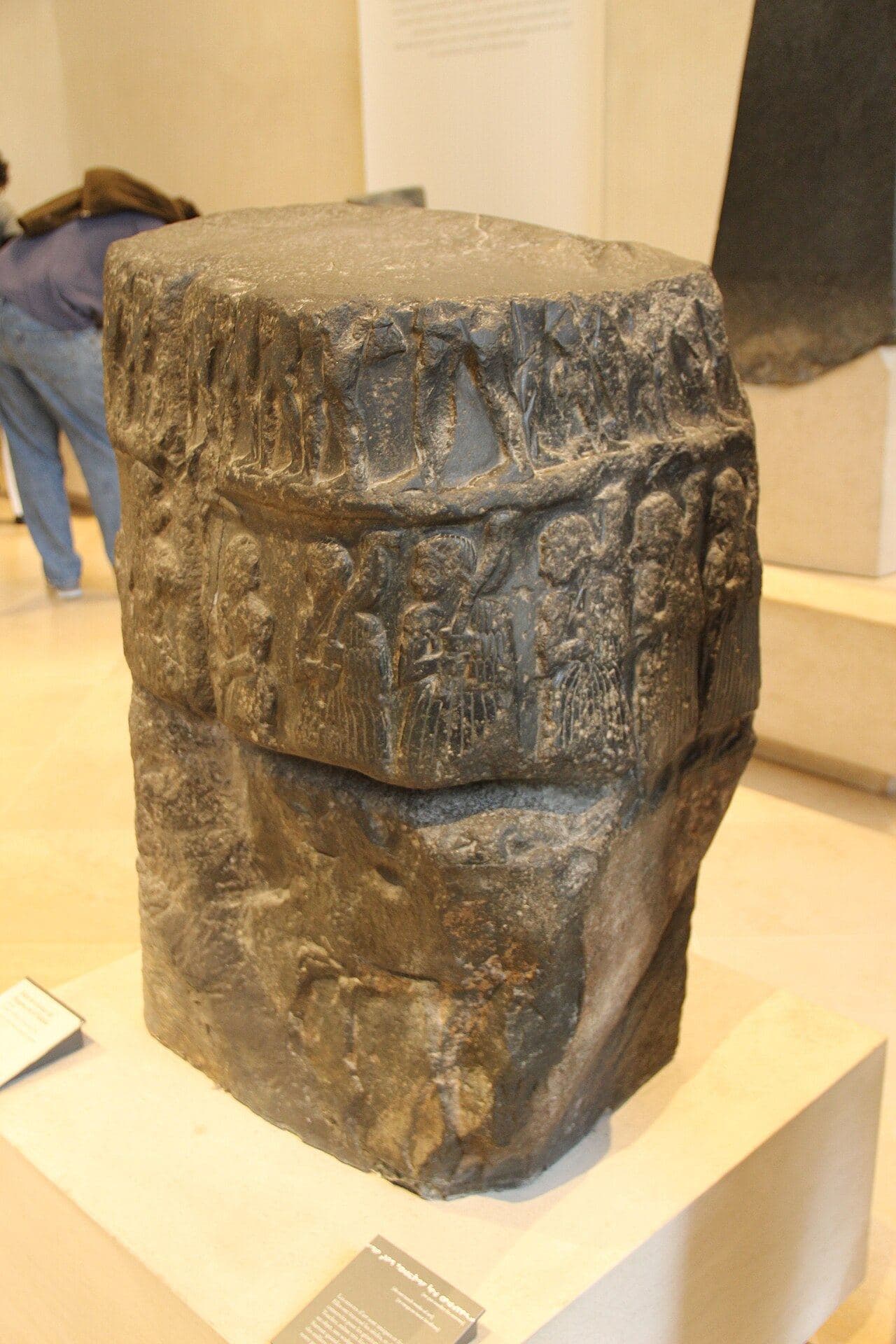
Enheduanna's household at Ur is some of the best-attested part of her entire life, which says a great deal about how thin the rest of the record is. Cylinder seals belonging to her staff survive: an estate manager named Adda, a hairdresser named Ilum-palil whose own grave was found within the sacred precinct, and two scribes. She lived in the gipar, the residence built for the high priestess within Ur's temple complex, excavated by archaeologists in the twentieth century.
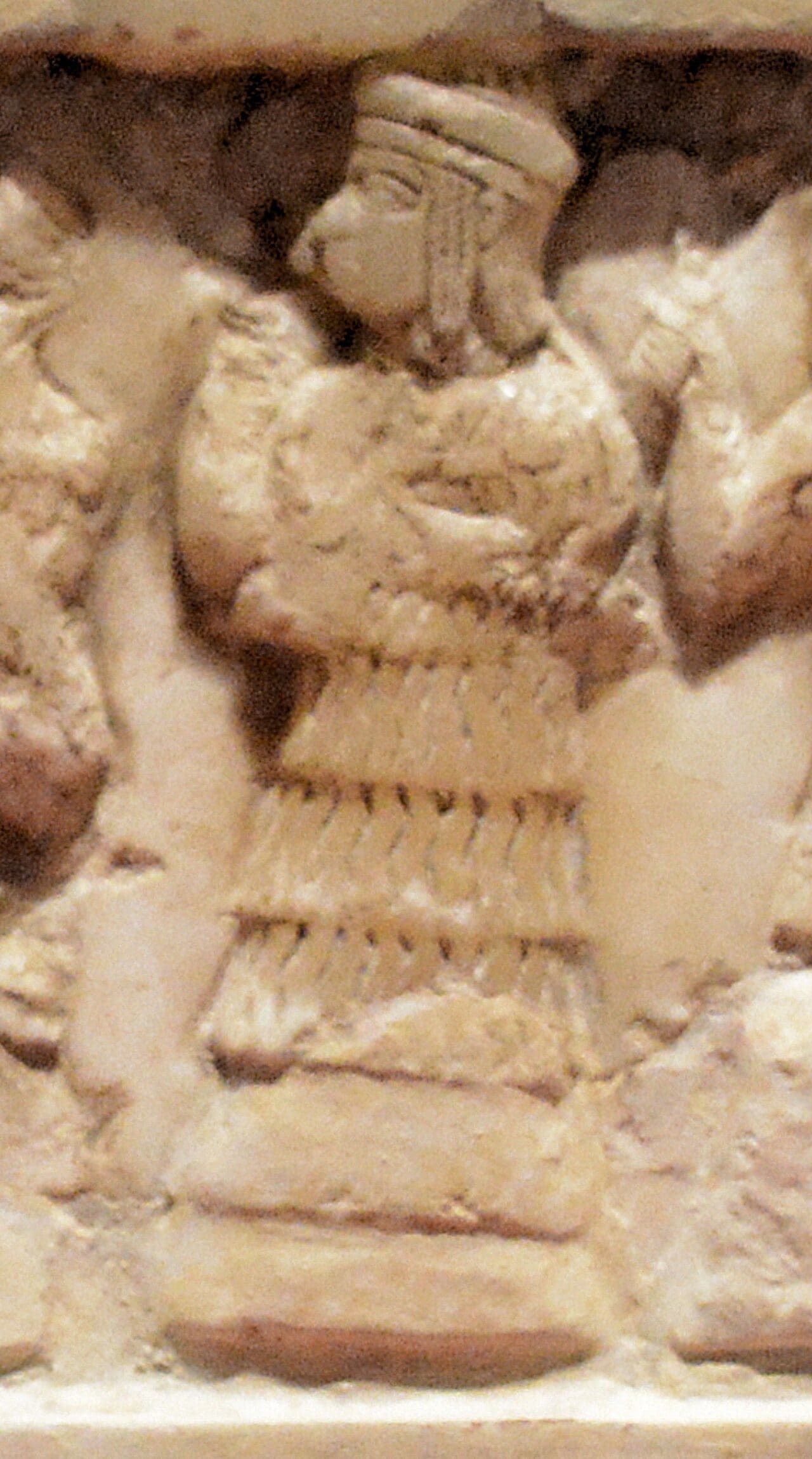
What she actually did day to day as en priestess is far less certain. A carved calcite disk found at Ur — badly broken, and restored in the twentieth century in ways some scholars now dispute — shows a tall robed woman, identified as Enheduanna by her placement and dress, raising a hand as she watches a priest pour a ritual offering. The inscription, partly preserved on the disk itself and completed from a later copy, names her "zirru priestess, wife of the god Nanna, daughter of Sargon." Beyond that single scene, her duties are mostly reconstruction: historians suggest she led temple rituals, oversaw temple estates, and perhaps interpreted dreams, but none of this is directly recorded. The honest answer is that we know she held one of Sumer's great religious offices, and we know far less about what holding it actually meant.
Exile: The Exaltation of Inana
The most dramatic episode of her life comes to us from exactly one source: a poem she is credited with writing herself. In the Exaltation of Inana, a composition addressed to the goddess Inana, a first-person narrator identified as "En-hedu-ana the en priestess" describes being driven out of Ur by a man named Lugal-Ane, who she says "altered everything" and seized the city's great temple. "He made me fly like a swallow from the window," the poem says. "He made me walk through the thorn bushes of the mountains. He stripped me of the rightful crown of the en priestess."
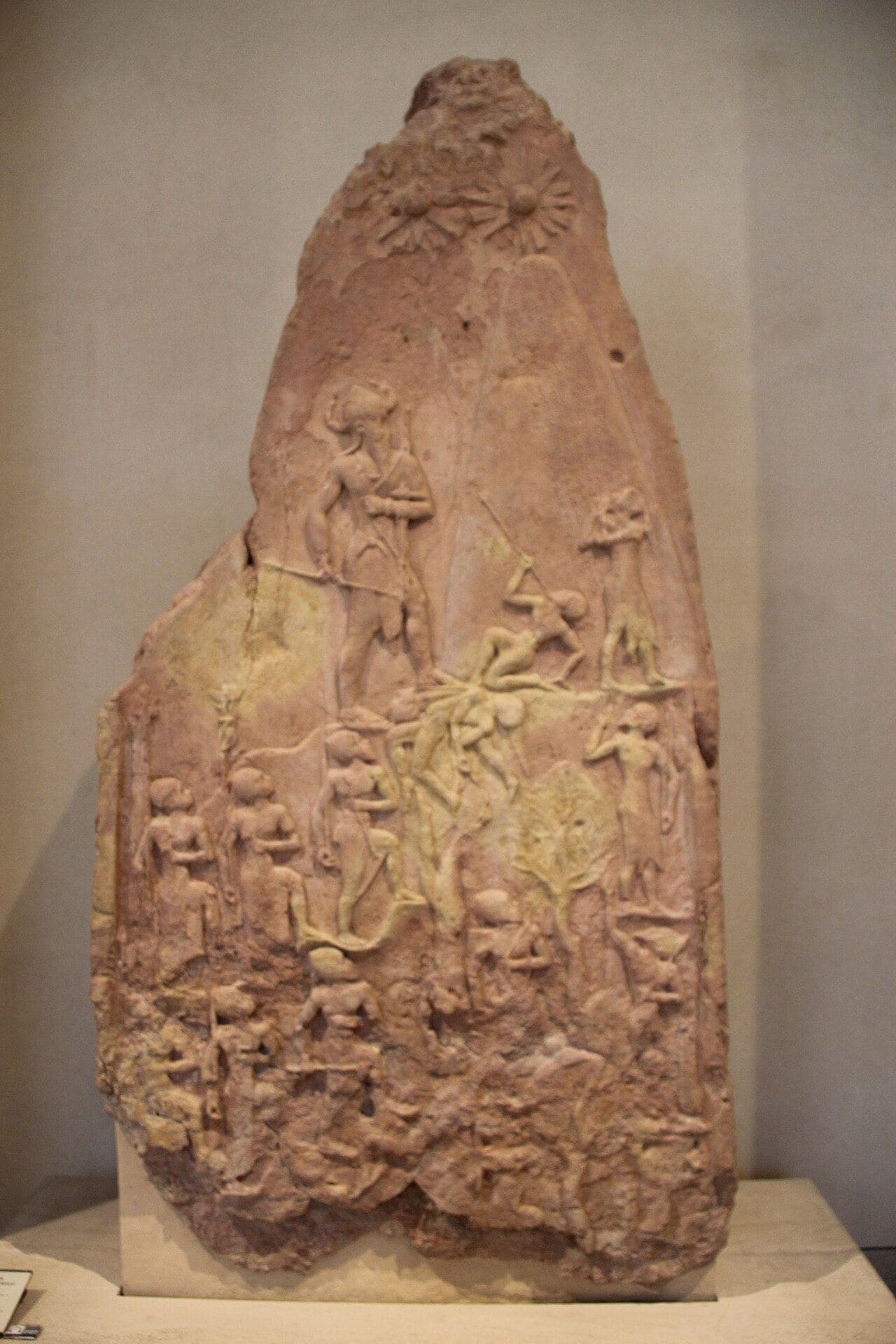
Who was Lugal-Ane? The best guess connects him to a figure named among the rebel kings of a great uprising against Enheduanna's nephew, Naram-Sin, who had succeeded to the Akkadian throne. If that identification is right, her exile happened sometime during his reign — but nothing outside the poem names Lugal-Ane, dates the revolt precisely, or even confirms where she was exiled to. This is the pattern throughout her "biography": a vivid, specific story, resting on a single poetic witness that cannot be cross-checked.
The poem does not end in defeat. Its final section describes the goddess Inana accepting the priestess's prayer and being reconciled with Nanna and his wife Ningal — which most historians read as a literary announcement of Enheduanna's restoration to her office, presumably after Naram-Sin crushed the revolt that had driven her out. It is a satisfying ending. It is also, like the exile itself, attested nowhere but inside the poem that describes it.
The First Author
What makes Enheduanna remarkable is not just that she held high office, but that Mesopotamian scribal tradition remembered her as a writer — the earliest individual anywhere in the world credited by name with authorship of surviving literature. Three major works carry her name: the Exaltation of Inana, a shorter hymn called the Hymn to Inana, and the Temple Hymns, a collection of forty-two hymns to temples across Sumer and Akkad, closing with a colophon that reads, "The compiler of the tablets was En-hedu-ana. My king, something has been created that no one has created before."
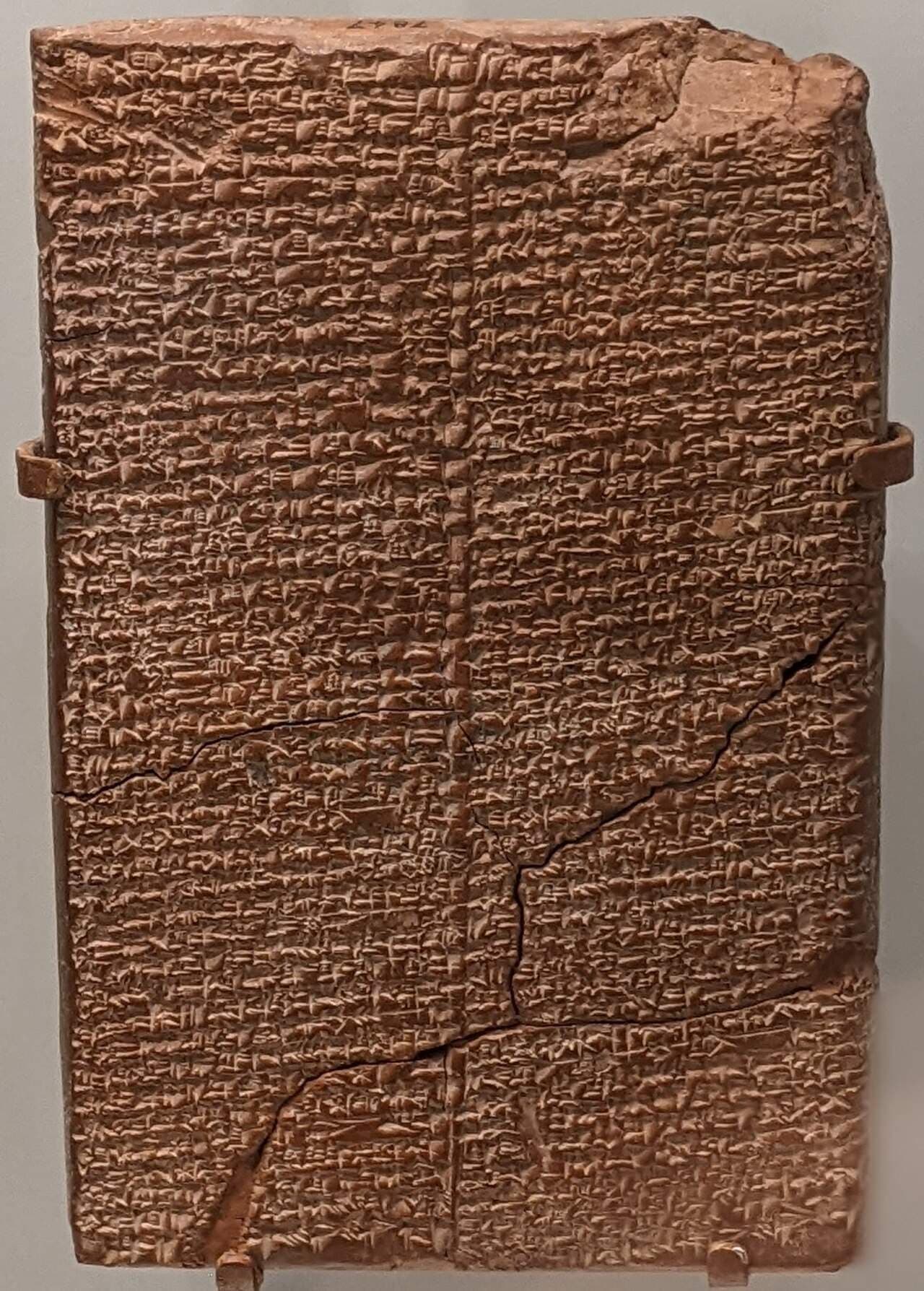
Here is the honest complication, and it is a real, live argument among the scholars who study this material, not a settled fact: every single manuscript of these poems that survives is a school copy made in the Old Babylonian period, roughly five hundred years after Enheduanna is thought to have lived. Some Assyriologists — Annette Zgoll prominent among them — argue she genuinely composed these works, pointing to their consistency and to Mesopotamian beliefs about ritual composition. Others, including Miguel Civil and Jeremy Black, have pointed to features of the texts that look like later additions or later language, and suggested her name may have been attached to a body of hymns compiled or expanded well after her death — the way, centuries later and in a different literary tradition, the name Homer gathered poems around it. Sophus Helle, whose 2023 translation is the fullest modern edition of her complete attributed works, sidesteps the yes-or-no question entirely: whatever the historical truth, he argues, the figure of "Enheduanna the author" mattered enormously to the Old Babylonian scribes who kept copying her — which is itself a kind of legacy, whoever actually held the stylus first.
What is not in dispute is that the Old Babylonian schools treated her as the author. Her Exaltation of Inana was a set text, copied by students dozens of times over, and most of those copies survive from the scribal centre of Nippur. Whatever her hand truly wrote, by the time these copies were made, her name meant authorship itself.
Legacy
Enheduanna disappears from the record as quietly as she entered it. We know only that her grandniece Enmenana, a daughter of Naram-Sin, eventually succeeded her as high priestess of Nanna — which means her tenure ended, by death or otherwise, sometime within Naram-Sin's reign. No source records when, where, or how.
Her reputation did not disappear so quietly. Scribal schools kept her name alive for centuries. Then she vanished almost entirely from memory until archaeologists excavating Ur in the 1920s uncovered her shattered disk and the seals of her household, and modern scholars connected those finds to the hymns bearing her name that had survived separately in the Nippur tablet archives. Since then she has become, fairly or not, a modern touchstone — "the world's first named author," a phrase that belongs on the honest side of the line only if read carefully: the earliest person history names as an author, not necessarily the actual first hand to shape these particular words. In 2015 the International Astronomical Union named a crater on Mercury after her — a strange kind of immortality for a woman whose own tomb has never been found, in a city whose great ziggurat, the one monument most associated with Ur today, wasn't even built until roughly two centuries after she served there.
What survives, in the end, is a disk, some seals naming her household, and poems other people's hands copied out long after she was gone. It is less than the legend wants and more than almost anyone else from her century left behind. "We have her disk, her seals, and her servants' names," as the research behind this page put it. "Her poems come to us in other people's handwriting, five hundred years later." That is not a small thing, for someone who lived forty-three centuries ago. It is simply an honest one.