- Born
- c. 60 BCUnrecorded — somewhere in the Kushite heartland between Napata and Meroë · now Sudan, along the Nile between Karima and Bagrawiya
- Died
- c. 10 BCUnrecorded, presumably Meroë, the Kushite royal seat · now near Bagrawiya, Sudan
- Known for
- Leading Kush's war against Rome and forcing Augustus to negotiate a peace that favored the losing side
- People
- Kushite (Meroitic) — rulers of an African kingdom on the Middle Nile in modern Sudan, who wrote their own script, Meroitic, still only partly deciphered today
- Spouse
- Teriteqas — named as king just before and possibly alongside her on Kushite monuments; several modern accounts call him her husband, though no ancient text states the relationship outright, and Kushite royal succession in this decade is genuinely disputed among scholars
- Children
- Akinidad — named beside her as prince/co-regent and probable field commander of the war; that he was literally her son, rather than another close male relative sharing rule, is a common but not certain reading
Milestones
- c. 60 BCBorn somewhere in the Kushite kingdom — no record fixes the year or place; this date is a placeholder, not a fact
- c. 27 BCAlready ruling as qore and kandake, likely alongside King Teriteqas, as Rome's prefect Aelius Gallus marches into Arabia and strips Egypt's garrisons
- c. 25 BCKushite forces raid Roman Egypt, seizing Syene, Elephantine and Philae and pulling down statues of Augustus — Strabo's account, our only substantial narrative of the war
- c. 24 BCThe Hamadab Stela is raised near Meroë, naming Amanirenas and Akinidad together
- c. 23 BCThe Roman prefect Gaius Petronius storms south and burns Napata, Kush's religious capital; Teriteqas disappears from the record around this time
- c. 22 BCLeads a renewed Kushite assault on the Roman garrison Petronius left at Premnis (Qasr Ibrim)
- c. 20 BCHer envoys secure peace with Augustus on Samos — Rome waives the tribute it had imposed and fixes the frontier near Hiera Sykaminos
- c. 10 BCDies — the year is a modern estimate from Kushite royal chronology, not a recorded date; succeeded by Amanishakheto
A Queen Before the War
Start with the name, because it is the one thing later writers kept getting wrong. Greek and Roman authors who wrote about Kush's queen call her "Candace" — but that is not a name at all. It is a Latinized version of kandake, a Meroitic royal title, roughly "queen" or "queen mother," worn by a whole line of Kushite ruling women across centuries. Strabo, our main source for this whole story, never once gives his "Candace" a personal name. The name Amanirenas comes to us only from Kushite monuments themselves — chiefly a large sandstone stela found at Hamadab, near Meroë, which names her and a co-ruler called Akinidad together, in Meroitic cursive script that is still only partly deciphered. Matching that stela's queen to Strabo's nameless "Candace" is the standard, widely accepted move in modern scholarship — but it is a scholarly identification, not something any ancient author states outright.
What can be said with more confidence: by the time this story opens, Amanirenas held the titles qore — sovereign, a word used for kings and this queen alike — and kandake, together. That combination signals she reigned as ruler in her own right, not simply as someone's wife. Kushite monuments name a king called Teriteqas just before and, some scholars think, alongside her; popular and academic accounts alike often call him her husband, and one account of a related artifact even describes the two of them jointly leading Kushite forces in 25 BC. Take that as plausible, not proven — no Greek or Latin writer names Teriteqas at all, and the exact sequence of Kushite rulers in this decade is one of the more argued-over stretches of the kingdom's history. What is clear is that Amanirenas is the name that survives into and past the war that follows; Teriteqas's name does not.
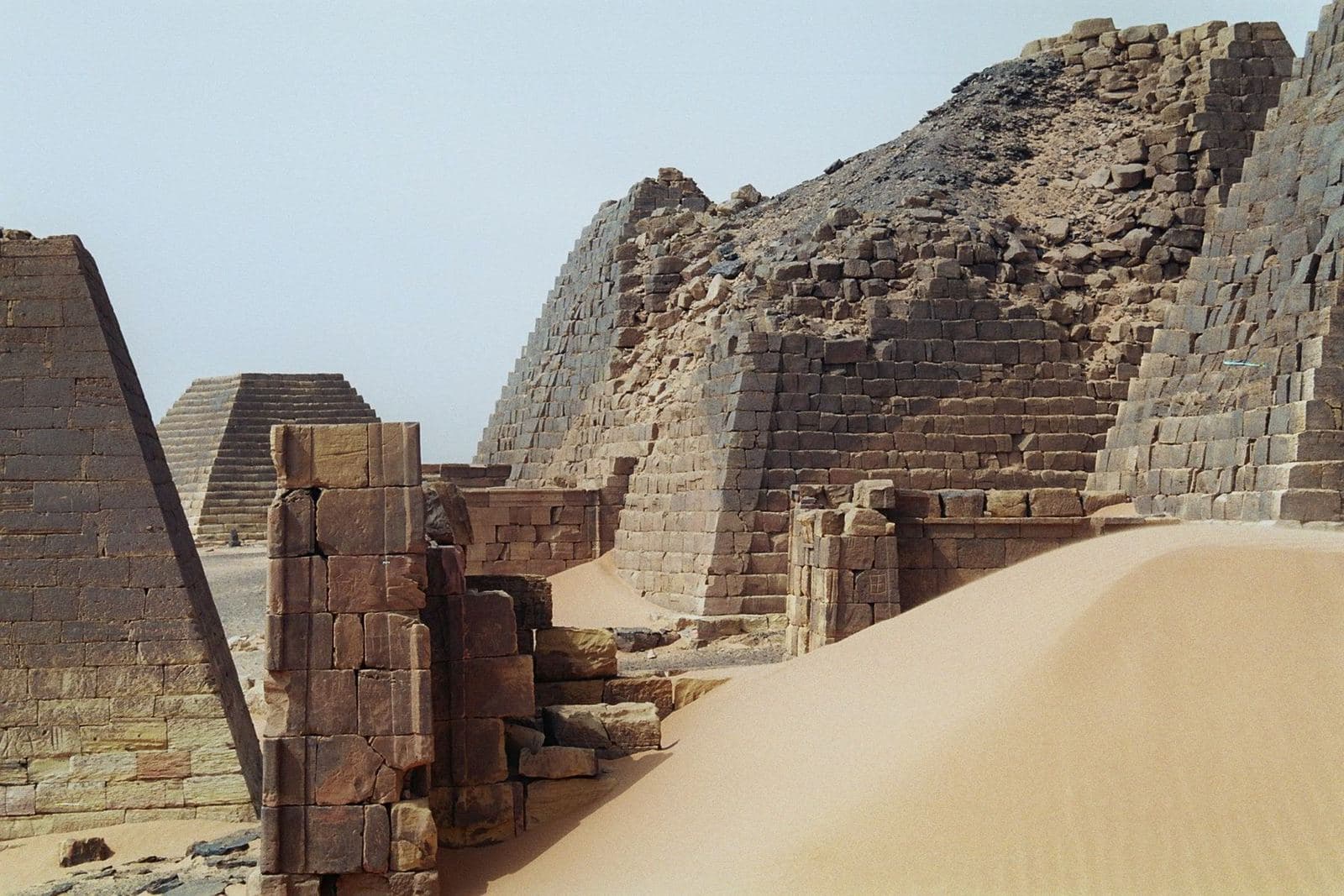
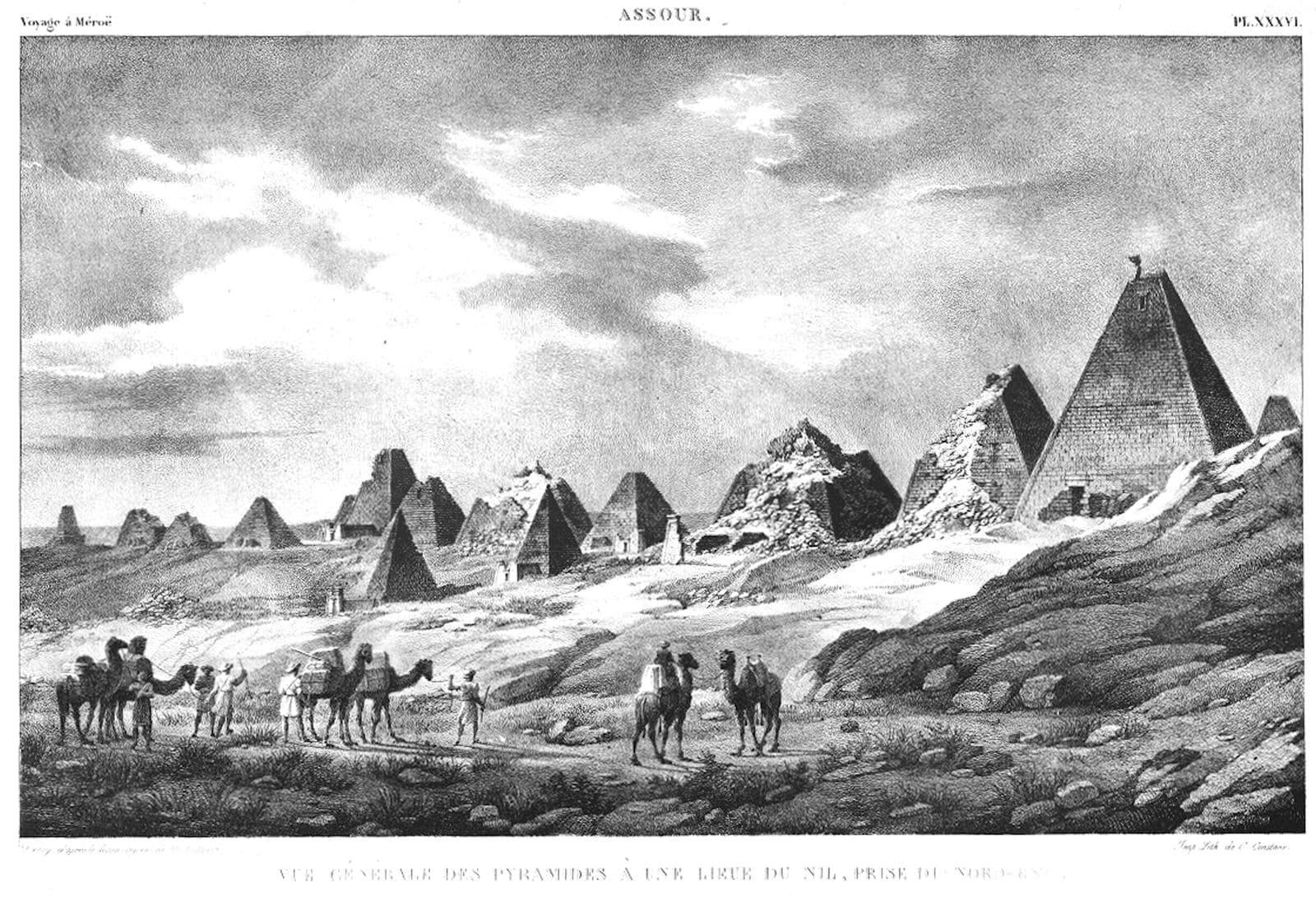
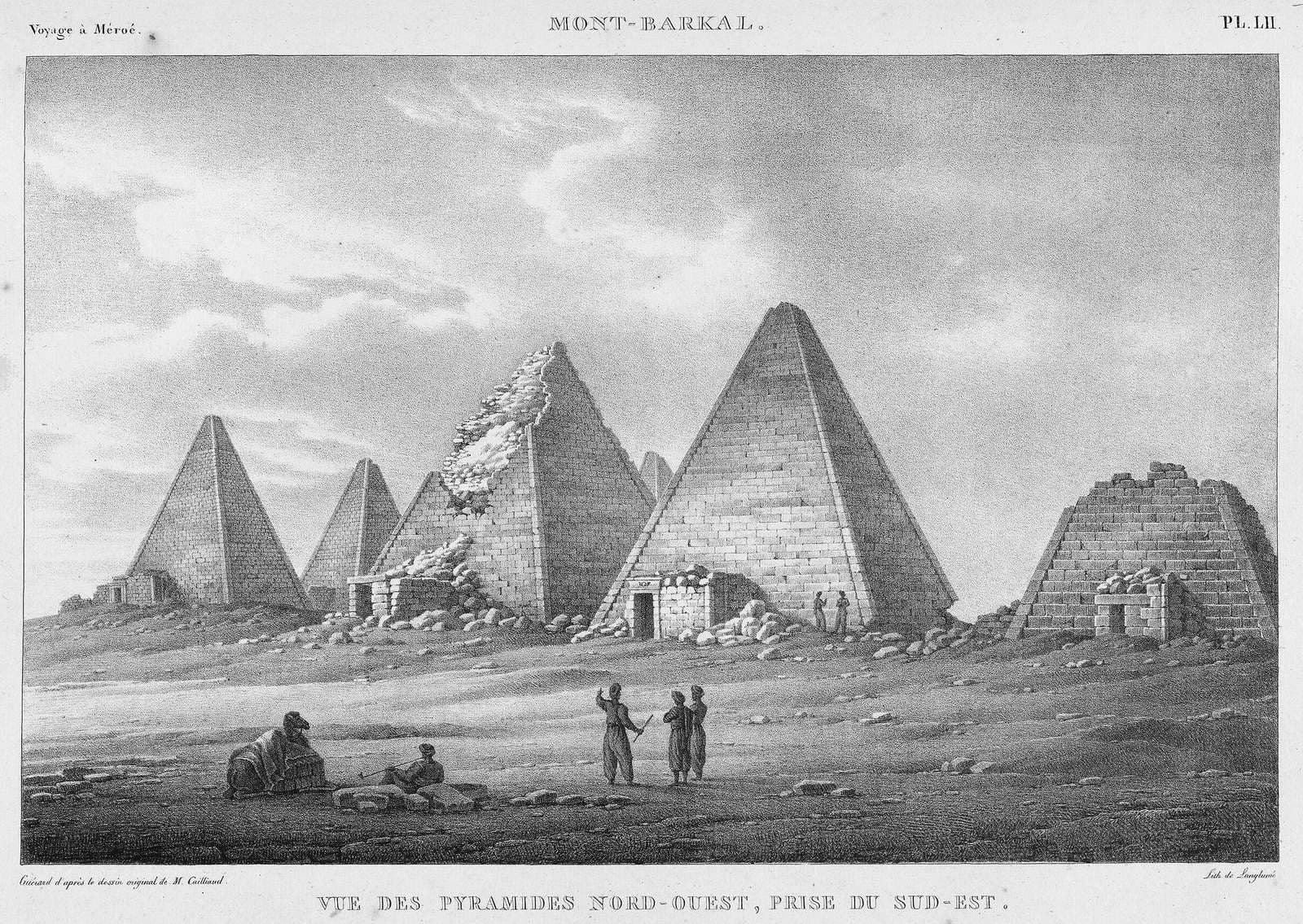
Kush itself is worth placing on the map here, because it rarely gets one. This was a wealthy, literate African kingdom stretching along the Nile south of Egypt, with two capitals: Napata, near the sacred mountain Jebel Barkal, its religious heart; and Meroë, further south, its political and economic center, ringed by the pyramid fields of its royal dead. Kush had ruled Egypt itself as its 25th Dynasty pharaohs three centuries earlier. By Amanirenas's time it was Egypt's southern neighbor and, when Rome absorbed Egypt in 30 BC after Cleopatra's fall, suddenly Rome's neighbor too.
The War with Rome
The trigger, per Strabo, was opportunity. Around 26–25 BC, the Roman prefect of Egypt, Aelius Gallus, marched a large expedition into Arabia, stripping the Egyptian garrisons to do it. With Rome's frontier undermanned, a Kushite army moved north — Strabo says around 25–24 BC — and struck the border towns of Syene (modern Aswan), Elephantine, and Philae. They enslaved residents, Strabo says, and toppled statues of Augustus. One of those statues' bronze heads was carried south as a trophy; it would resurface nineteen centuries later in a way nobody in either army could have predicted, and this page comes back to it below.
Rome answered hard. The new prefect, Gaius Petronius, marched south with what Strabo calls fewer than 10,000 infantry and 800 cavalry — against, Strabo says, some 30,000 Kushites. Treat that second number the way you should treat any ancient army count: probably inflated, impossible to check, and repeated here only because it is what our source says, not because it is safe to believe. Petronius won at Pselchis, pushed deep into Kushite territory, and around 23 BC took and burned Napata itself — the religious capital, the city built in the shadow of Jebel Barkal's sacred mountain. It is at roughly this point that Teriteqas's name vanishes from the Kushite record; no source says he died here, but the timing is suggestive enough that many historians assume it.
Petronius left a garrison of about 400 men at Premnis (modern Qasr Ibrim, still just inside Kushite reach) and pulled the rest of his army back to Alexandria. That was the moment Amanirenas answered in turn. Strabo describes "Candace" — by every modern reading, her — leading a large Kushite force against that garrison. He adds one physical detail that has followed her into every retelling since: he calls her "a masculine sort of woman, and blind in one eye." That description comes from Strabo's own near-contemporary account, not a later legend tacked on centuries afterward, so it sits closer to fact than folklore — but it is still one hostile foreign writer's claim, filtered through Roman military reports, about a woman his own culture had every reason to want to paint as strange. No burial, no bones, no independent source confirms it. Believe it if you like; know that it cannot be checked.
Petronius reached Premnis before it fell. What followed was not a Roman mop-up, but a negotiation — and that is the genuinely remarkable part of this whole war.
Peace at Samos
Amanirenas sent envoys forward; Petronius passed them along to the one person who could actually make peace: Augustus himself, then wintering on the Greek island of Samos, busy settling Rome's affairs across the whole eastern Mediterranean (this was the same stay during which he arranged the return of Rome's lost legionary standards from Parthia — independently well-documented, and useful for placing the date at around 21–20 BC). Strabo reports the outcome in one blunt line: Augustus "granted all their requests."
Those requests were not trivial. Rome dropped the tribute Petronius had imposed on Kush entirely. The frontier was fixed far to the north, near Hiera Sykaminos (modern Maharraqa), with the intervening Dodekaschoinos region held as a loosely garrisoned buffer rather than conquered territory. Rome did not push its border deep into Kush, did not install a client king, and did not demand the kind of submission it extracted from most peoples it fought to a standstill. For a war that Strabo's own account frames as a Roman victory, the peace reads far more like a settlement between two states that had each hurt the other enough to want it over. Modern historians describe it, fairly, as one of the few times in Rome's long expansion that a foreign power fought Rome and came away from the peace table better off than a defeated neighbor should expect. That frontier arrangement held, with only minor friction, for roughly two and a half centuries.
The Buried Emperor
Here is where the war's strangest artifact belongs. In December 1910, the archaeologist John Garstang was excavating at Meroë when his team found a larger-than-life bronze head — Augustus's own face, cut from its statue, its glass-and-calcite eyes still startlingly intact after nineteen centuries in the sand. It had been buried in a clean pocket of earth just in front of the entrance steps of a native temple, one that may have been dedicated to Victory.
The well-attested facts stop there: the head, the findspot, the date range (stylistically, 27–25 BC, meaning the statue was new or nearly new when it lost its head), and the location — in front of a doorway, not in a storeroom or a grave. Everything else is the strongest kind of scholarly inference, not a document that spells out anyone's intentions: that this head came from one of the Augustus statues toppled in the 25–24 BC raid on Roman Egypt; that Kushite soldiers carried it south as a trophy; and that burying it under the temple's threshold was a deliberate, calculated insult — so that every priest and worshipper who ever climbed those steps would tread on the Roman emperor's face without even knowing it was there. Petronius reportedly recovered and returned most of the statues taken in the raid as part of the peace process. This head, whichever statue it came from, he never got back. It sat underfoot at Meroë for nineteen hundred years, and it now sits in a glass case in the British Museum — still, in its own way, a captive.
Legacy
Amanirenas's death is not dated by any source that survives; the year usually given, around 10 BC, is worked backward from Kushite royal chronology — the sequence of pyramids, the styles of later monuments, the point at which a new name, Amanishakheto, starts appearing as ruling queen in her place — not from any inscription that records the day she died. Her birth year is not attested at any level; nothing in the record even lets historians estimate it the way they can, roughly, for Hannibal. Any date given for it, including on this page's own timeline, is a placeholder to hang a chart on, not a fact recovered from evidence.
What is solid is the shape of what she did. A Kushite queen, ruling in her own name, met the newly-minted Roman Empire in open war within a few years of Rome swallowing Egypt — the very neighbor whose fall had just brought legions to her doorstep — and came out of it with Rome's tribute waived and her kingdom's independence intact. Few rulers anywhere in Rome's orbit in this period, male or female, client king or hostile neighbor, managed a peace that good. The record that lets us say so is maddeningly thin: one hostile-source narrative, one partly-unreadable stela, and a buried bronze head that speaks more clearly than any surviving word of hers ever will. That imbalance is itself part of her story. Kush wrote its own history in a script we still cannot fully read, and so the woman who made an emperor negotiate is known to most of the world only through the words of the side she fought to a standstill.